

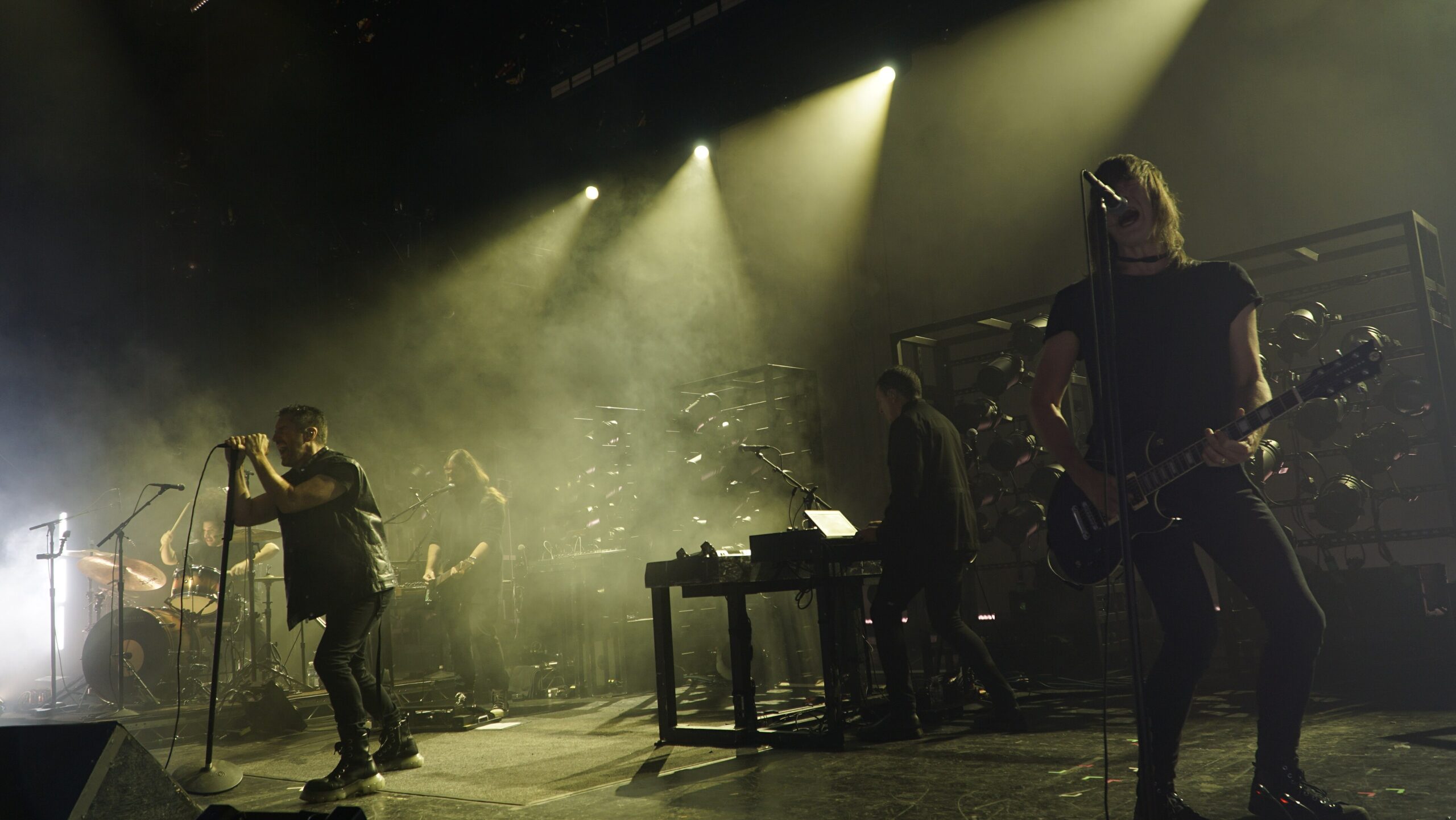
David Fincher keeps returning to Trent Reznor and Atticus Ross because their music does more than make his films sound dark. It reveals the anxiety beneath his controlled images, finds emotion inside guarded characters and creates tension through contrast as often as force. Just as importantly, the composers can reinvent their approach for each story without losing the precision and unease that make them such natural partners for Fincher.
A Sixth Trip Into Fincher’s World
That partnership will continue with The Further Mis-Adventures of Cliff Booth. Netflix revealed Reznor and Ross’ involvement through the film’s official poster on November 2, 2026, with the credit also reported by Variety, Pitchfork, Rolling Stone and Consequence.
Directed by Fincher from a screenplay by Quentin Tarantino, the film brings Brad Pitt back as Cliff Booth, the stuntman he played in Once Upon a Time… in Hollywood. Netflix’s Tudum and Rolling Stone describe the new story as taking place in 1977, eight years after the events of Tarantino’s 1969-set film.
The movie is scheduled to open in IMAX on November 25 before arriving on Netflix on December 23, according to Tudum and Variety. It will be the sixth Fincher feature scored by Reznor and Ross—and the latest chapter in a collaboration that has lasted 16 years.
The Experiment That Worked
When Fincher hired Reznor and Ross for The Social Network in 2010, the choice was intriguing precisely because it did not feel obvious. Reznor was best known as the founder of Nine Inch Nails, while Ross had already become one of his key creative partners. Their backgrounds in electronic and industrial music seemed far removed from the conventional sound of an awards-season drama built around conversations, depositions and computer screens.
That distance became the score’s advantage.
Rather than treating the creation of Facebook as a straightforward story of technological triumph, Reznor and Ross gave it a nervous internal pulse. Electronic textures suggested movement and possibility, but distortion and repetition made that momentum feel unstable. The music captured ambition as both exhilaration and compulsion.
Fincher’s images often remain composed even when his characters are unraveling. The score supplied the pressure those images deliberately withheld. It communicated isolation, resentment and hunger without asking the performances or dialogue to become more demonstrative.
The experiment received the film industry’s highest recognition. The Academy of Motion Picture Arts and Sciences and the official Nine Inch Nails discography record Reznor and Ross as the winners of the 2011 Oscar for original score. More importantly for the partnership, the film established a shared method: Fincher could maintain his visual discipline while the composers explored the emotional machinery running underneath it.
Proving It Was More Than a One-Off
The pair returned almost immediately for The Girl with the Dragon Tattoo in 2011. Both the official Nine Inch Nails discography and the Recording Academy identify it as their second Fincher collaboration.
This time, the musical world was broader, colder and more physically oppressive. The score had to support an intricate mystery, damaged characters and an atmosphere shaped by isolation. Instead of repeating The Social Network, Reznor and Ross expanded their vocabulary into something more sprawling and abrasive.
That ability to change mattered. A successful first collaboration can be a fortunate match between artists and material. A second film tests whether the relationship can survive different demands.
The Girl with the Dragon Tattoo showed that Fincher was not simply hiring the duo for a fashionable electronic sound. He was working with composers who understood how to build a psychological environment around his storytelling. The Recording Academy and Variety record that the score won the 2013 Grammy for best score soundtrack for visual media.
Finding Threat Inside Comfort
With Gone Girl in 2014, Reznor and Ross demonstrated another reason the partnership endures: they know when contradiction is more unsettling than emphasis.
The film’s world contains polished homes, media-ready appearances and carefully managed identities. Its music can sound smooth or reassuring on the surface, yet that calm never feels entirely safe. The apparent comfort becomes suspicious.
That tension fits Fincher’s filmmaking particularly well. His movies frequently examine the gap between presentation and motive—what people show the world versus what they conceal. A score that simply announced danger would flatten that gap. Reznor and Ross instead helped make pleasant surfaces feel unstable.
The result was not merely “dark music” for a dark story. It was music that participated in the film’s deception, encouraging the audience to question emotional signals that would ordinarily provide reassurance.
Reinvention Through Trust
Mank, released in 2020, presented the clearest challenge to any idea that Fincher wanted one fixed sound from the duo. Set around 1930s and 1940s Hollywood, the film required a musical language far removed from the electronic textures most closely associated with Reznor and Ross.
Their return showed that the collaboration was based on adaptability rather than branding. They could respond to a period production and its old-Hollywood atmosphere without turning the assignment into a familiar Nine Inch Nails exercise.
That flexibility helps explain Fincher’s loyalty. Creative trust does not have to mean repetition. In a mature partnership, trust can create room for greater change because the collaborators already understand one another’s standards, instincts and working rhythms.
Reznor and Ross remained recognizable not through a single collection of instruments, but through their attention to texture, structure and psychological detail.
A Shared Language in The Killer
By The Killer in 2023, their fifth Fincher feature, the partnership had become less like a recurring experiment and more like an established cinematic language.
The film’s procedural world depends on control, routine and repetition. Its restrained score works within that system rather than constantly fighting for attention. Music, silence and sound design contribute to the same tightly regulated atmosphere.
This is another strength Reznor and Ross bring to Fincher: they do not need to explain every feeling. Their scores can remain patient, allowing unease to accumulate around characters who reveal little about themselves. In films built around secrecy and self-control, music becomes a way to suggest interior pressure without translating it into simple emotional instructions.
Why the Partnership Lasts
Across five released features, four qualities have kept the collaboration productive.
First, there is trust. Six assignments across 16 years indicate that Fincher knows Reznor and Ross can respond to the needs of an individual film.
Second, their music provides interiority. Fincher’s characters are often disciplined, deceptive or emotionally inaccessible. The scores expose strain without forcing those characters to confess it.
Third, the duo understand productive contrast. They can place serenity beside menace, beauty beside brutality and vulnerability beneath precision.
Finally, they can reinvent their materials while preserving a distinct sensibility. The Social Network, Gone Girl and Mank do not inhabit the same musical world, yet each score shares an interest in atmosphere, tension and the unstable emotions hidden inside carefully designed surfaces.
The Next Test
The Further Mis-Adventures of Cliff Booth introduces a different setting, a familiar character and an unusual creative combination: Tarantino’s screenplay filtered through Fincher’s direction, with Reznor and Ross shaping the musical environment.
No official track list or musical preview has established what their 1977-set score will sound like. That uncertainty is part of the appeal. The partnership has endured because its outcome is not automatic.
Reznor and Ross have become the sound of Fincher’s cinema not by repeating one successful formula, but by finding new ways to enter his characters’ minds. Cliff Booth will test that adaptability again—and extend one of modern film music’s most durable creative relationships.












Leave a Reply