

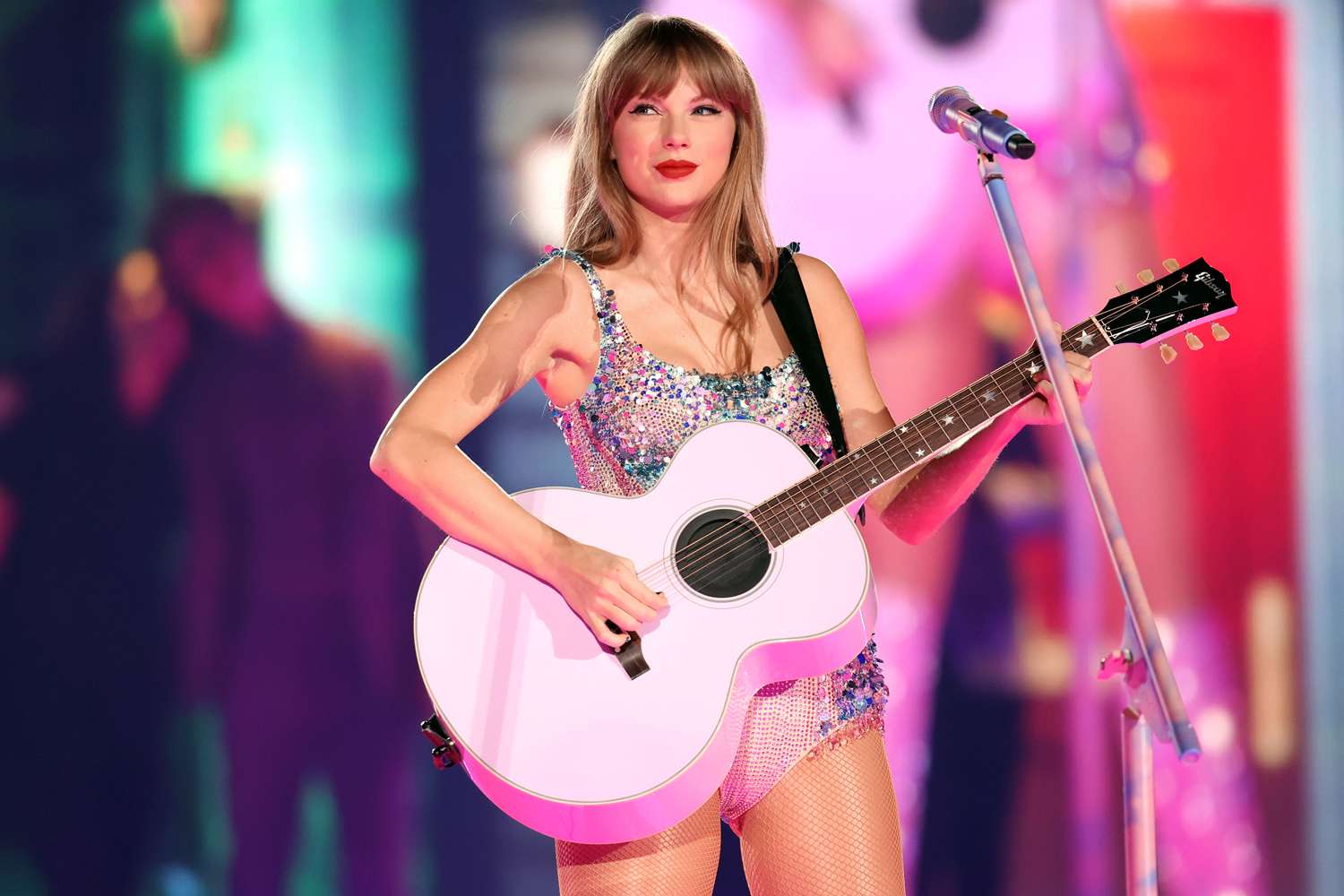
As Taylor Swift’s self-titled debut approaches its twentieth anniversary on October 24, 2026, it matters because it established the method behind her career: personal storytelling, sharply defined emotional situations and country songs built to travel beyond country radio. The album did not arrive as a blockbuster. It grew over time, turning a modest opening into a durable breakthrough through five successful singles, persistent promotion and a teenage perspective the record treated with unusual seriousness.
Before the Blockbuster Openings
The scale of Swift’s later releases can make the beginning difficult to see clearly. Billboard reported that Taylor Swift sold approximately 39,000 copies in its first week; Swift later rounded that figure to 40,000. It entered the Billboard 200 at No. 19, then continued gaining listeners until it reached No. 5 more than a year later.
That slow climb is central to the album’s story. Guinness World Records and later chart reporting credit it with 24 nonconsecutive weeks at No. 1 on the Top Country Albums chart. BMI and contemporary radio-trade reporting also document that all five of its singles reached the country top 10—an exceptional run for a new artist’s first album.
On September 30, 2025, the Recording Industry Association of America certified the album eight-times platinum. That represents at least eight million certified U.S. album units under the RIAA’s system, rather than eight million physical CDs alone. The distinction matters because album certifications can combine physical and digital album sales, track downloads and eligible streams.
This was not an overnight success hidden beneath later mythology. It was a record that kept finding new listeners.
A Teenage Point of View, Taken Seriously
Swift was 16 when the album was released, as documented by the Recording Academy and AllMusic. More important than her age, however, was the perspective from which the songs were written.
The album’s original 11 tracks center on first attraction, rejection, betrayal, insecurity, exclusion and the search for belonging. These experiences are not presented as minor rehearsals for adult life. They are the emotional world of the record.
That approach helped distinguish Swift from young performers singing material designed entirely by adults. She wrote or co-wrote every song on the standard edition. AllMusic, MusicBrainz and Apple Music credit her as the sole writer of “The Outside,” “Should’ve Said No” and “Our Song.” She wrote the remaining tracks with collaborators including Liz Rose, Robert Ellis Orrall, Angelo Petraglia and Brian Maher.
The writing is not yet as structurally intricate as the work Swift would produce later, but its core strengths are already recognizable. The songs establish a clear situation quickly. They use conversational phrasing and concrete emotional stakes. Most importantly, they understand that a memorable detail can make a familiar experience feel personal.
“Cold as You” turns disappointment into a direct confrontation. “The Outside” describes social isolation from the position of someone still living through it. “Mary’s Song (Oh My My My)” stretches young romance into an imagined lifetime. Even when the arrangements place the album firmly in mid-2000s country, the storytelling points toward the songwriter Swift would become.
Why “Tim McGraw” Was the Right Introduction
Big Machine Records released “Tim McGraw” on June 19, 2006, four months before the album arrived. In interviews with iHeart and The Washington Post, co-writer Liz Rose recalled that Swift brought the initial idea to a writing session after developing it during math class while thinking about a relationship that would soon end.
The title was an efficient piece of country songwriting and an equally effective introduction. Tim McGraw’s music serves as a memory trigger within the song: the narrator hopes that hearing a familiar favorite will remind someone of her. The song draws on an established country star’s cultural presence while keeping the focus on Swift’s own story.
It also demonstrated a quality that would remain important throughout her catalog—the ability to organize a song around how music becomes attached to places, people and periods of life.
The launch depended on personal effort as much as the hook. Contemporary and retrospective accounts describe Swift’s extensive visits to country radio, while BMI documented the importance of her online connection with listeners. She performed for programmers, met station personnel and used MySpace to communicate with fans at a time when artist-to-fan social media still felt novel.
That work suited the circumstances. Big Machine was a newly established independent Nashville label, Swift was an unknown teenager, and country radio remained essential to turning a regional introduction into a national career.
Five Singles Built the Audience
The album’s growth unfolded through a sequence rather than a single breakthrough moment.
“Tim McGraw” established Swift as a country storyteller. “Teardrops on My Guitar” broadened her reach, with a pop version demonstrating that the directness of her writing could survive outside a strictly country arrangement. “Our Song,” which Swift wrote alone, became a No. 1 on Billboard’s Hot Country Songs chart and supplied the album with one of its most energetic calling cards.
“Picture to Burn” sharpened the record’s defiant side, while “Should’ve Said No” brought the campaign to another Hot Country Songs No. 1. BMI and contemporary radio-trade reporting confirm that the five singles all reached the country top 10.
Taken together, they introduced several versions of Swift without making the album feel disconnected: reflective observer, wounded romantic, playful narrator and furious accuser. Each release gave radio and listeners another entry point. By the time the campaign ended, the debut was no longer simply the promising start of a teenage singer-songwriter. It had become a long-running country success with clear pop potential.
The Nashville Foundation
The record’s crossover appeal did not erase its Nashville construction. Before releasing the album, Swift signed a publishing agreement with Sony/ATV Tree Publishing. Contemporary Billboard reporting, Sony records and the Songwriters Hall of Fame place that development at age 14, while BMI’s May 2005 announcement described her as 15. The accounts appear to reflect the difference between when the agreement was reached and when it was publicly announced. Either way, songwriting—not merely performance—was at the center of her professional identity before the album arrived.
Nathan Chapman produced most of the album. Apple Music and MusicBrainz credit Robert Ellis Orrall as producer on “The Outside,” with Chapman receiving an additional production credit. Together, the recordings use acoustic and electric guitars, fiddle, banjo and polished rhythm sections to frame Swift’s voice without overwhelming the narratives.
Liz Rose was particularly important to the writing process, sharing credit on seven of the standard edition’s 11 songs. Their collaboration helped translate everyday teenage language into compact country structures. Yet the presence of co-writers should not obscure Swift’s authorship. The album’s consistency comes from its point of view: one young writer repeatedly turning uncertainty into stories with beginnings, tensions and memorable resolutions.
What the Album Created
The debut did more than predict Swift’s future. It created the conditions for it.
Its gradual success proved that songs written from inside adolescence could command a large country audience. Its single campaign showed that the same writing could move toward pop without losing its narrative identity. Its promotion connected traditional radio work with emerging online fan relationships. Above all, it established Swift as a songwriter whose perspective—not simply her voice or image—was the product.
The twentieth anniversary also arrives in a changed ownership context. In an official letter published in May 2025, Swift announced that she had purchased the original masters and associated assets for her first six albums from Shamrock Capital, a transaction independently reported by the Associated Press. She also said she had completely rerecorded her debut but did not announce a release date in that letter.
That unresolved release question should not overshadow the album already available. At 20, Taylor Swift is most revealing when heard on its original terms: not as a rough draft of a superstar, but as the record that patiently built one listener, one station and one song at a time.


Leave a Reply