


The Dallas Cowboys Cheerleaders’ brand owner is reportedly taking legal action because My Chemical Romance used dancers in lookalike blue-and-white uniforms during a theatrical shootout at the Hollywood Bowl. The concern is not primarily the band’s music or the simulated violence. It is whether the costumes resembled the cheerleaders’ distinctive uniform closely enough to suggest that the official organization participated in, sponsored or approved the performance.
What Happened During “Teenagers”
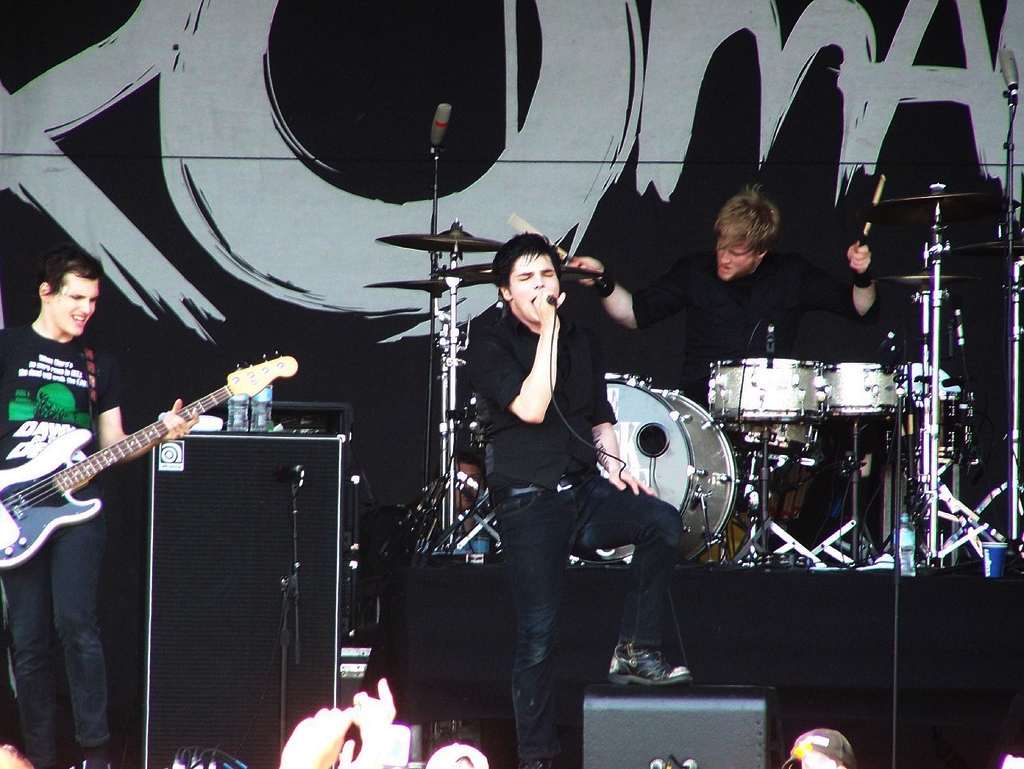
My Chemical Romance opened its Hollywood Bowl engagement on October 21, 2026, with a production celebrating The Black Parade, the band’s 2006 album. During “Teenagers,” dancers in blue-and-white costumes resembling Dallas Cowboys Cheerleaders uniforms performed with prop rifles, according to NME and Consequence.
The sequence escalated into a staged firefight. The dancers participated in the simulated exchange and appeared to be shot before crawling offstage.
They were not members of the Dallas Cowboys Cheerleaders, according to NME. TheWrap reported that the subsequent legal filing alleged that some audience members and online commentators nevertheless believed the official squad was involved.
That distinction is central to the dispute. A production does not necessarily need to announce a formal partnership for its imagery to raise questions about association. If a costume is strongly identified with a particular organization, its appearance can potentially communicate a connection even when no name is spoken.
What the Cheerleaders’ Brand Owner Reportedly Wants
Pro Silver Star Ltd., identified by TheWrap and TMZ as the owner of the Dallas Cowboys Cheerleaders brand, reportedly requested a temporary restraining order and temporary injunction against My Chemical Romance.
Those are forms of emergency relief intended to restrict challenged conduct while a larger dispute proceeds. In this case, the reported immediate concern is the continued use of the costumes during the band’s Hollywood Bowl engagement.
TheWrap and TMZ also reported that Pro Silver Star asked My Chemical Romance to stop using the uniforms before seeking court intervention. According to the company’s allegations, the defendants declined to discontinue them.
These remain reported allegations, not established judicial findings. No ruling on the emergency request was located, and an independently accessible copy of the filing was not found during this review.
The Dispute Is About Association, Not the Shootout Itself
The most sensational part of the performance was the sight of dancers dressed like cheerleaders carrying rifles and falling during a simulated gunfight. Legally, however, the costumes appear to be the heart of the matter.
According to TheWrap and TMZ, Pro Silver Star’s objection concerns the dancers’ resemblance to the Dallas Cowboys Cheerleaders and the possibility that audiences could infer an official connection. The reported filing says the company is not asking the band to change its music, narrative, choreography or use of gun-carrying performers.
That makes this a dispute about brand identity and potential audience confusion.
The key question is not merely whether the costumes were similar. It is whether their combination of colors, design and ornamentation could lead spectators to believe that the Dallas Cowboys Cheerleaders participated in, endorsed or authorized the production.
It is also too early to know how My Chemical Romance might answer that question. The band could dispute the degree of similarity, the likelihood of confusion, the scope of any enforceable rights or the application of those rights to an expressive concert production. Without an accessible filing and formal response, those possible defenses should not be treated as the band’s actual legal position.
How a Uniform Can Work Like a Trademark
Most people think of trademarks as names, logos or slogans. Trademark law can also protect trade dress—the overall appearance of a product or its packaging—when it identifies a source and satisfies the other requirements for protection.
A uniform may perform that function when distinctive, nonfunctional features of its overall appearance have become associated with one organization. Colors alone are not automatically protected in every setting, and no team owns every possible variation of a general cheerleading outfit. The issue is whether a particular arrangement of recognizable elements has acquired source-identifying meaning and whether another use is likely to cause legally relevant confusion.
For the Dallas Cowboys Cheerleaders, that argument has significant legal history behind it.
The 1979 Case Behind the Current Fight
In Dallas Cowboys Cheerleaders, Inc. v. Pussycat Cinema, Ltd., the cheerleaders challenged the use of a closely copied uniform in the film Debbie Does Dallas and its advertising. In 1979, the U.S. District Court for the Southern District of New York granted preliminary relief after finding that the uniform’s particular combination of colors and decorations had acquired source-identifying significance.
The U.S. Court of Appeals for the Second Circuit affirmed the preliminary injunction on August 14, 1979. Its opinion recognized that confusion under trademark law can involve more than uncertainty over who physically produced a work. A copied uniform could also create the mistaken impression that the cheerleaders sponsored or approved its use.
That history helps explain why Pro Silver Star would focus on the visual identity of the costumes used during “Teenagers.” The earlier case supports the broader principle that distinctive elements of the uniform can operate as a trademark rather than as a merely functional outfit.
It does not, however, automatically decide the current dispute. The Hollywood Bowl sequence is a different work presented in a different medium and context. A court would need to consider the costumes actually used, the way they appeared within the concert, the applicable legal claims, the likelihood of confusion and any defenses raised by the band or other defendants.
No such analysis has been confirmed in a ruling on this matter.
Why “Teenagers” Was the Setting
The Black Parade was released in the United States through Reprise Records on October 24, 2006, according to Apple Music and MusicBrainz. “Teenagers” appears as the album’s eleventh track on Apple Music and Warner Records’ official anniversary edition.
The Hollywood Bowl production arrived as part of the album’s 20th-anniversary celebration, as confirmed by Warner Records’ tour announcement and contemporary concert coverage. Warner’s official anniversary edition describes the album as following a central character called the Patient through reflections on his life and passage into the afterlife.
Neither the band nor its production team was found explaining how the disputed shootout was intended to interpret “Teenagers.” The staging can therefore be described, but its intended meaning should not be assumed.
What Happens Next
The reported action places a famous piece of rock theater against one of the most recognizable uniforms in American entertainment. Its significance reaches beyond one concert scene: it raises the question of how far a protected visual identity can extend when artists incorporate familiar cultural imagery into a dramatic performance.
For now, the clearest answer is also the narrowest one. The Dallas Cowboys Cheerleaders’ brand owner reportedly acted because it believes the lookalike costumes could falsely imply an official association. The organization’s 1979 appellate victory gives that argument historical weight, but it does not supply a verdict in the new conflict.
Until an accessible court record or ruling establishes otherwise, this remains an allegation over possible trademark association—not a confirmed finding that My Chemical Romance infringed anyone’s rights.

Leave a Reply