

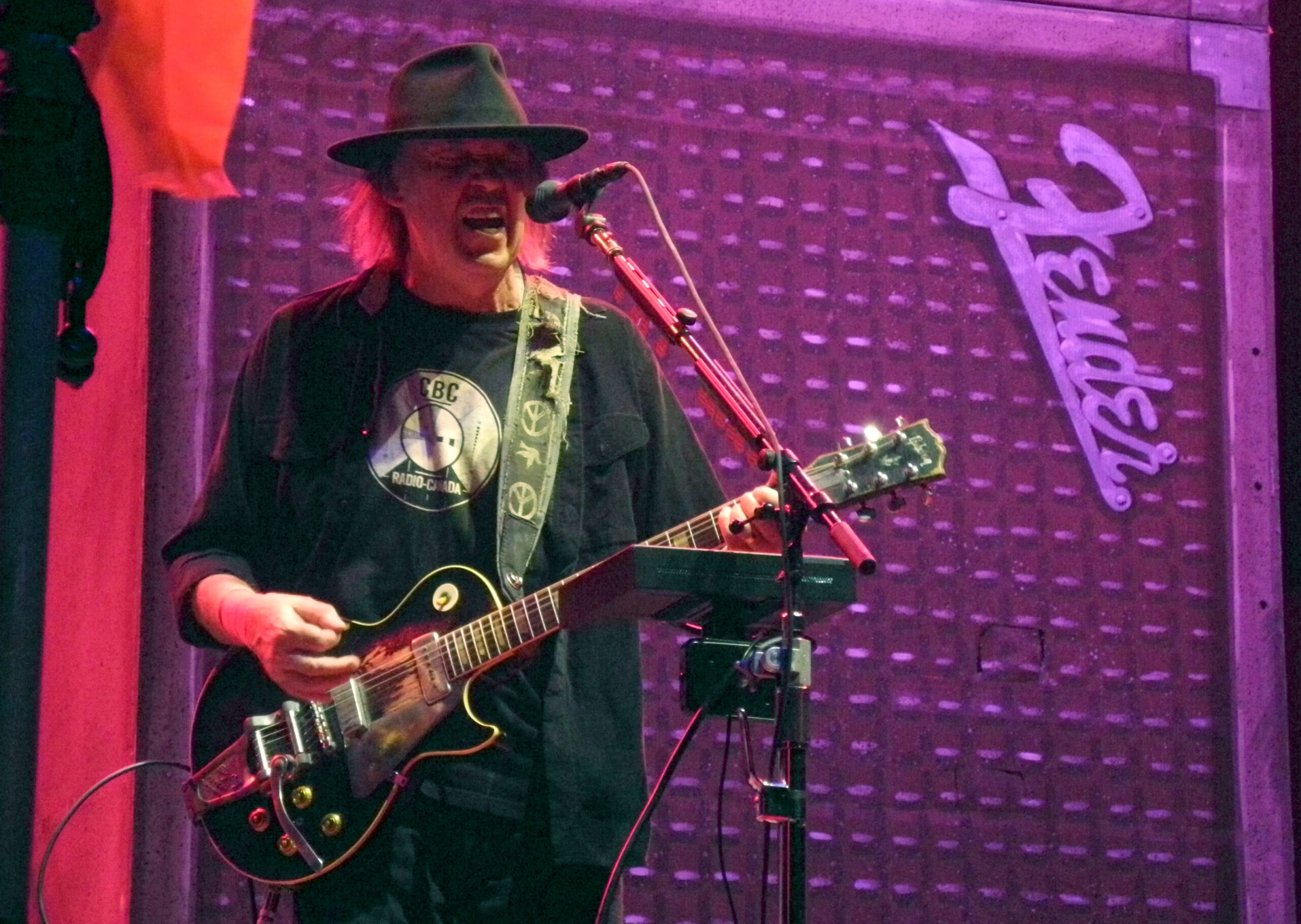
Sometimes. A political campaign does not necessarily need an artist’s personal approval before playing a song at a rally, but it generally needs a valid license covering that public performance. Whether the use is lawful can depend on the campaign’s license, the rights controlled by the songwriter or publisher, and whether the composition has been excluded from the campaign’s license. An artist’s objection matters, but it does not—by itself—prove copyright infringement.
Neil Young’s latest dispute over “Rockin’ in the Free World” shows why the distinction matters. His federal lawsuit alleges that Trump 47 Committee Inc. played the song at an October 2026 rally without authorization. Those claims have not been decided, and the committee’s licensing position remains publicly unknown.
What Neil Young Alleges Happened
Young filed his complaint against Trump 47 Committee—not Donald Trump personally—on October 26, 2026, in the U.S. District Court for the Eastern District of Virginia.
According to accounts of the five-page complaint from Variety, Bloomberg Law and Courthouse News Service, Young alleges that the committee caused “Rockin’ in the Free World” to be played shortly before President Trump appeared at an October 12 rally in Youngstown, Ohio. The complaint also alleges that the song was used at other 2026 political events.
Young is requesting $10 million and an injunction that would prevent the committee from playing his compositions at political events. That figure is a demand, not a court award. No court has determined that the committee infringed Young’s copyright, and reports published when the case became public did not include a substantive response from the committee.
The central question is not simply whether Young approved. It is whether the performance was covered by a valid license—and, if not, who was legally responsible for causing it.
Permission and Licensing Are Different
Public arguments about campaign music often combine two separate questions.
The first is personal approval: Does the artist support the candidate or want the song associated with the campaign?
The second is legal authorization: Did the campaign have the rights needed for that particular use?
A songwriter can oppose a candidate while a campaign maintains that its performance was licensed. Conversely, a campaign cannot assume that a song is available merely because it is popular, the event venue regularly plays music or the recording can be streamed online.
For a rally, the main issue is usually the public-performance right in the musical composition—the underlying words and music. Performing-rights organizations such as ASCAP, BMI, SESAC and Global Music Rights license large catalogs on behalf of songwriters and publishers.
Other uses can require additional rights. Incorporating a particular recording into an advertisement, promotional video or social-media post is different from playing music over a venue’s sound system. A livestream or posted rally clip may raise still more questions. No single license automatically covers every way a campaign might use a song.
Why a Venue’s Blanket License May Not Be Enough
Concert halls, arenas, hotels and other venues commonly hold blanket public-performance licenses. Those agreements allow venues to play compositions from a licensing organization’s catalog without negotiating separately for every song.
Political events can work differently.
The Congressional Research Service explains that general venue licenses from ASCAP and BMI usually exclude campaign and party-convention uses. Campaigns may therefore need political-entity licenses designed specifically for political organizations and events.
Even then, the name of a licensing organization is not the end of the analysis. Coverage can depend on the agreement’s terms, the date of the performance and whether the composition remained covered. BMI’s political license, for example, allows BMI to exclude a work after receiving an objection from a songwriter or publisher and notifying the licensee. The American Bar Association notes that the ability to demand an exclusion may depend on who controls the relevant rights and the terms of the songwriter’s publishing arrangements.
That means a campaign’s statement that it has “an ASCAP license,” for example, would not necessarily establish that every ASCAP-administered composition was covered at every rally. The precise agreement, repertoire and exclusions would matter.
What Young Would Need to Establish
Young’s complaint reportedly alleges that Trump 47 Committee lacked both a license and his permission. The committee may contest either allegation when it responds.
Several factual and legal questions could determine the outcome:
-
Which rights were controlled by Young or his publisher? Copyright ownership and licensing authority must be established for the composition at issue.
-
Did the committee possess a political-entity license? If so, the court would need to examine what events, organizations and repertoire it covered.
-
Was “Rockin’ in the Free World” included? A broad license may still exclude a specific composition.
-
Had the song been formally excluded? A public complaint from an artist is not necessarily the same as completing the process required to remove a work from a political license.
-
Who caused the performance? Responsibility may depend on who selected the music and directed that it be played.
-
What supports the damages request? Young would need a legal and factual basis for the relief he seeks. Requesting $10 million does not mean that amount is owed.
These issues are why an artist’s public “no” can be culturally powerful without settling the copyright case.
A Dispute With a Long History
“Rockin’ in the Free World” appeared in acoustic and electric versions on Young’s 1989 Reprise album Freedom. Beneath its forceful, patriotic-sounding refrain, the song addresses poverty, addiction, homelessness and social decline. Its political associations have always been more complicated than its chorus alone might suggest.
Trump used the song at his June 16, 2015, campaign announcement. Young and his management said the use was unauthorized, while the campaign said it had obtained the right to play the song through an ASCAP license. Contemporary reports from Time, the Los Angeles Times, The Guardian and Fortune record the objection and the campaign’s licensing claim.
Young sued Donald J. Trump for President Inc. in August 2020 over alleged performances of “Rockin’ in the Free World” and “Devil’s Sidewalk.” The filed complaint identifies the two compositions and alleges that both were played at Trump’s June 20, 2020, rally in Tulsa, Oklahoma. Bloomberg Law and Pitchfork reported that Young voluntarily dismissed the action with prejudice on December 7, 2020.
The 2026 complaint reportedly says the earlier campaign settled and promised not to use “Rockin’ in the Free World” again without a license and Young’s permission. The public 2020 dismissal did not disclose that agreement or its terms, however, and the new defendant is a different corporate entity. Whether any private agreement applies to Trump 47 Committee remains unresolved.
Copyright Is Not the Only Possible Issue
Campaign-song disputes can also extend beyond public-performance licensing. Repeated and prominent use may create the impression that an artist supports a candidate, even when the artist has publicly said otherwise.
Depending on the facts, disputes may involve claims related to false endorsement, trademark law or an artist’s right of publicity. Those theories have different requirements from copyright infringement. Political disagreement and reputational discomfort do not automatically establish any of them.
For campaigns, the practical lesson is straightforward: verify the license, check whether the song has been excluded and document who approved the music. For artists, a public objection may communicate opposition, but notice to the relevant rights holder, campaign and licensing organization can be legally important.
Young’s lawsuit may ultimately turn on paperwork and facts that have not yet become public—not simply on his long-standing objection to Trump’s use of the song. Until the committee responds and the evidence is tested, the performances and lack of authorization remain allegations.
This article explains general legal principles and is not legal advice.


Leave a Reply