

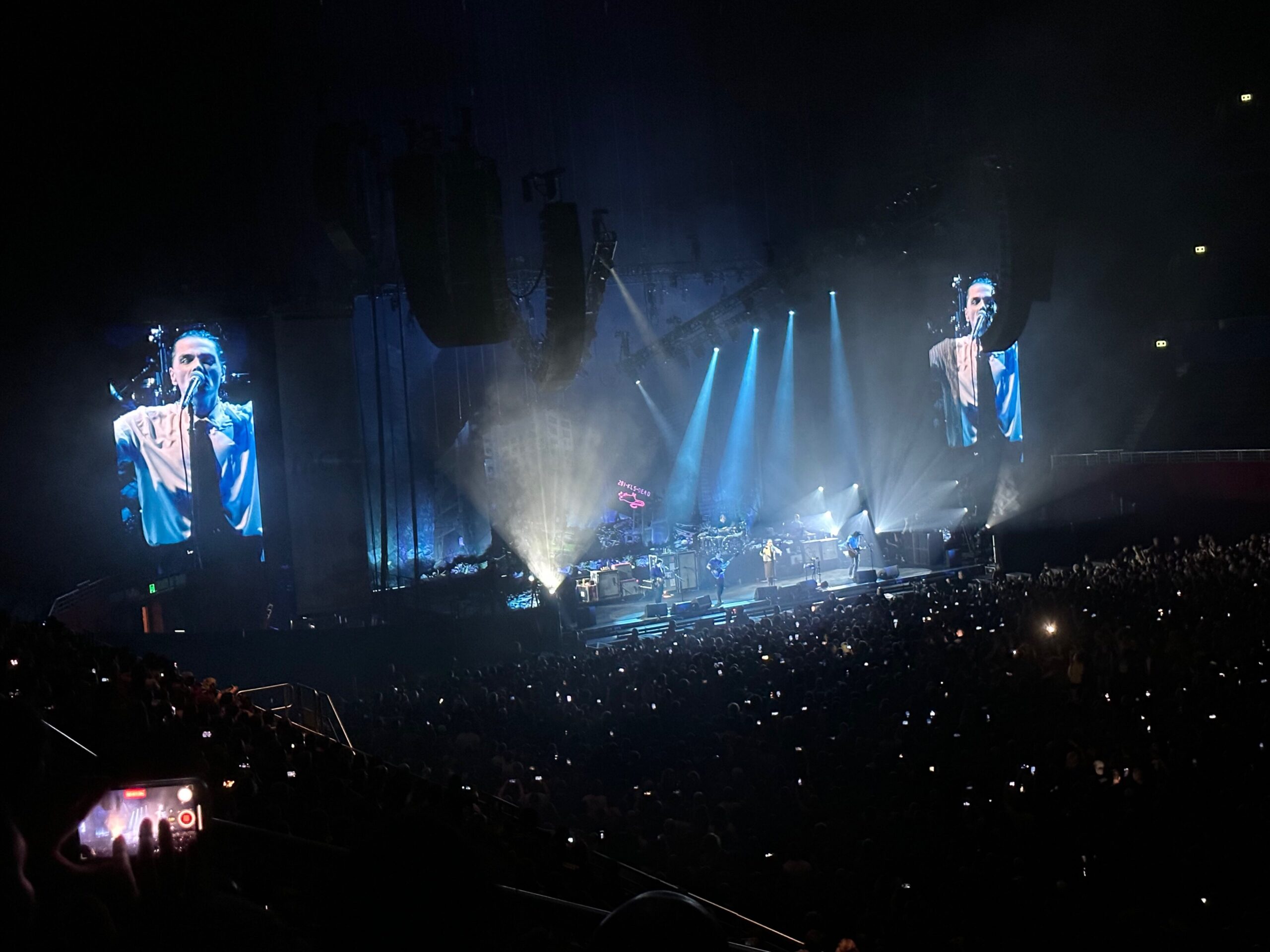
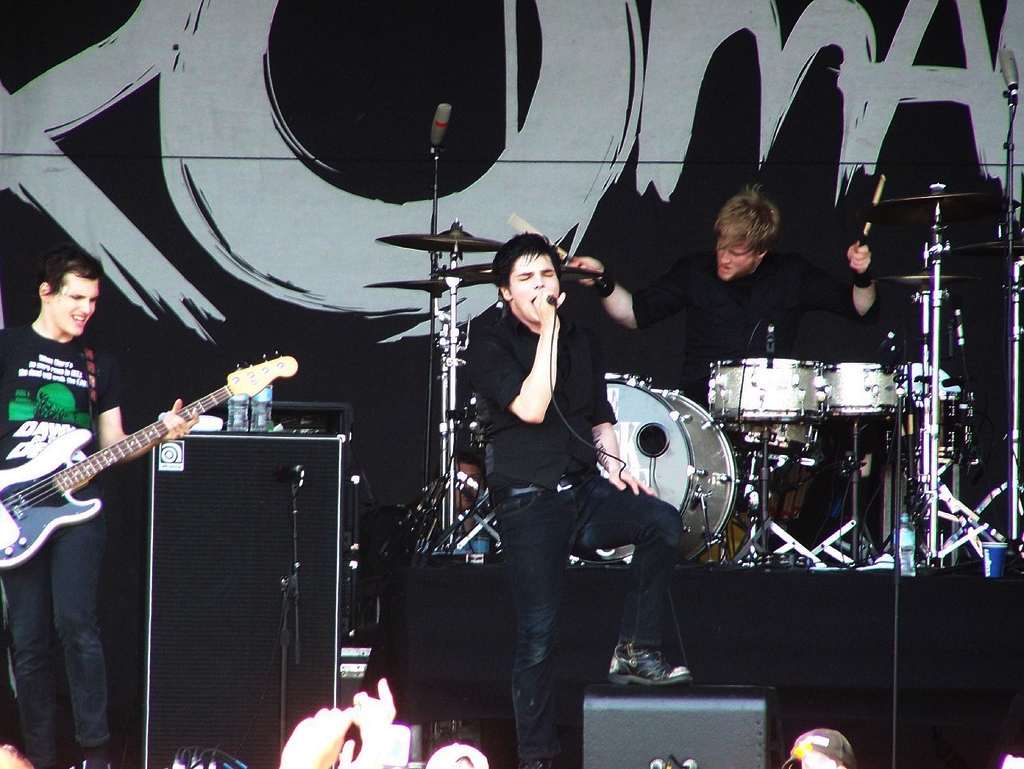
Prelude to The End connects to The Black Parade most directly by placing “The End.,” the album’s opening track, inside Lauren Tsai’s animated world of discarded art and forgotten ideas. The result is more than a new setting for an old song: it brings the album’s themes of mortality, memory and performance into a story about what happens to creations after they are abandoned. In the context of The Black Parade’s 20th anniversary, the short extends My Chemical Romance’s visual mythology without presenting itself as a new MCR record.
“The End.” Opens the Door
Released in 2006, The Black Parade begins with “The End.,” a brief, theatrical introduction that prepares the listener for the album’s larger meditation on death. Rolling Stone, Pitchfork and The Music Universe identify it as the album’s opening song and report that it appears in Prelude to The End.
That placement matters. “The End.” does not simply introduce a collection of songs. It feels like the raising of a curtain, linking mortality to spectacle from the album’s first moments. Its presentation suggests that death is not only something to fear or mourn but also something that can be staged, narrated and transformed through art.
The title Prelude to The End plays with that function. A prelude traditionally prepares an audience for what follows, while “The End.” announces a conclusion. Putting those ideas together makes the film feel like another entrance into The Black Parade: a new beginning built around a familiar ending.
Enter Lauren Tsai’s Dying World
The animated short follows Astrid, a student at a New England boarding school overwhelmed by trash. After school authorities discard her cherished sketchbook, she follows it down a trash chute and enters a realm populated by forgotten ideas. Pitchfork, Rolling Stone and The Music Universe describe this central premise.
The sketchbook is the hinge between the ordinary world and the imagined one. It contains creations that have been rejected or left behind, yet those creations continue to exist somewhere beyond Astrid’s everyday surroundings.
That story grows out of characters and imagery from Tsai’s The Dying World. The Annecy Festival’s official listing credits Tsai as the director of an earlier The Dying World short about Astrid, while Rolling Stone reports that the film appeared at the festival in 2025. Prelude to The End brings that world into contact with My Chemical Romance’s music, allowing each body of work to change how the other is understood.
Within Tsai’s story, “The End.” no longer belongs only to the deathbed narrative and parade imagery associated with the 2006 album. It becomes the soundtrack to a different passage: Astrid’s pursuit of something she created and lost.
Where the Two Worlds Meet
The connection between The Black Parade and The Dying World is partly musical, but it is also thematic. Neither My Chemical Romance nor Tsai has provided a definitive guide requiring viewers to interpret the film in one particular way. Still, several parallels are visible.
First, both works are concerned with endings. The Black Parade approaches mortality through the scale and drama of a rock performance. Tsai’s realm is filled with ideas that have reached a different kind of end: they have been thrown away, neglected or forgotten.
Both also ask what remains after disappearance. The album repeatedly turns death into an act of remembrance, while the film gives discarded creations a world in which they can survive. In each case, absence does not mean total erasure.
Astrid’s sketchbook also makes art a form of resurrection. Ideas that seem lifeless in one setting become animated in another. The anniversary project performs a similar act with “The End.” A song that listeners have known for two decades enters a new visual environment and takes on a different narrative purpose.
Finally, both works use performance as transformation. The Black Parade converts fear, grief and mortality into theatrical rock. Prelude to The End transforms that theatricality again through animation, voice acting and orchestral music. The film does not recreate the album’s established imagery scene by scene. It shows how the album’s ideas can live inside another artist’s language.
The Soundtrack Builds the Bridge
“The End.” is one half of the film’s musical identity. Pitchfork, Rolling Stone and The Music Universe also report that the score incorporates a live recording of Pascal Dusapin’s Flying River, Violin Concerto, performed by Utopia Orchestra and conducted by Giuseppe Mengoli.
Rolling Stone and The Music Universe credit Daniel Lozakovich as the violin soloist and identify the Fondation Louis Vuitton as the performance location. The orchestral material gives the film a musical frame beyond My Chemical Romance’s catalog.
That combination helps distinguish Prelude to The End from a conventional music video. The short is not simply an animated illustration of “The End.” Instead, MCR’s theatrical rock and Dusapin’s contemporary classical work become parts of a larger score supporting Tsai’s story.
A Cast From Music, Film and Games
The voice cast broadens the collaboration across several creative worlds. Rolling Stone and The Music Universe identify Lauren Tsai as Astrid. Pitchfork, Rolling Stone and The Music Universe report that Billie Eilish voices Astrid’s friend, Phoebe Bridgers plays her sister, Hideo Kojima appears as the Teacher and John C. McGinley voices the Dean.
Those names draw together alternative music, visual art, acting and game design. Their involvement reinforces the short’s identity as a cross-medium project rather than an ordinary album promotion.
The cast should not, however, be mistaken for evidence of a musical supergroup or a new MCR recording. The confirmed reporting identifies the guests as voice performers in the animated film.
Why the Anniversary Context Matters
The Black Parade arrived in 2006 as My Chemical Romance’s third studio album and the follow-up to Three Cheers for Sweet Revenge, according to Apple Music and the band’s official anniversary statement.
Twenty years later, the group released The Black Parade (20th Anniversary Deluxe Edition) through Reprise Records on October 23, 2026. Apple Music supplies the date and label, while Rolling Stone independently places the anniversary release on the preceding Friday. Prelude to The End followed during the same anniversary period and was scheduled to screen at the final two concerts of MCR’s five-night Hollywood Bowl engagement on October 30 and 31, according to Pitchfork and Rolling Stone.
Together, those releases make the anniversary more than a matter of restoring or repackaging the original album. The deluxe edition returns listeners to the record, while the animated short asks what its music can become in another artist’s world.
That is the larger connection. Prelude to The End treats The Black Parade as living material: music that can be revisited, reanimated and placed inside a new story without losing its original emotional weight.
Nothing in the confirmed reporting establishes the film as a preview of a new My Chemical Romance album or song. It is best understood as an anniversary-era visual collaboration—one that uses “The End.” to open another door into The Black Parade.


Leave a Reply