

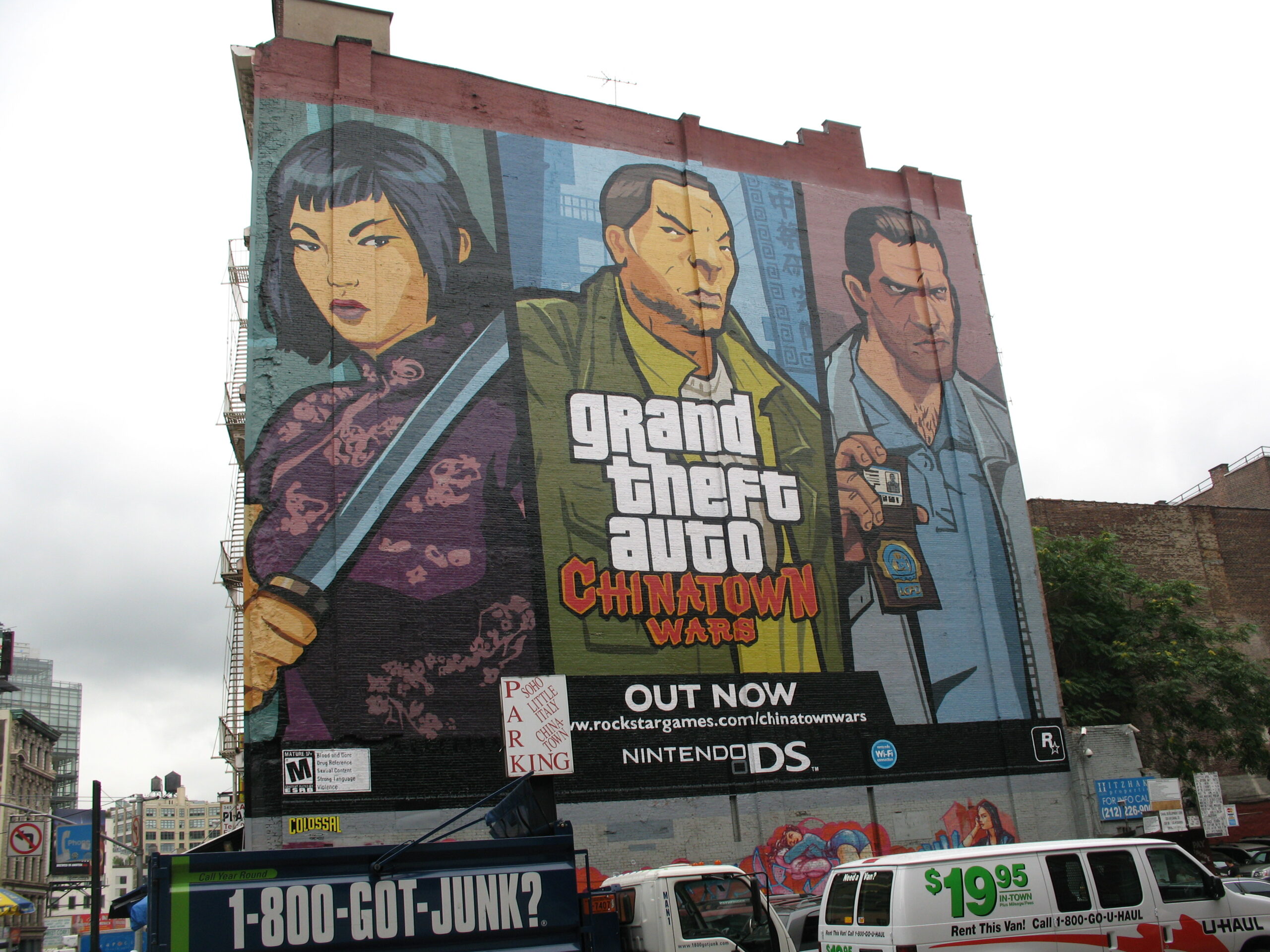
Grand Theft Auto radio became a music institution by doing far more than filling silence between missions. Rockstar Games turned fictional stations into carefully programmed worlds: songs are grouped by genre, framed by memorable hosts, interrupted by advertisements and attached to places players inhabit for dozens of hours. Over time, those stations also became discovery tools, artist-curated events and soundtrack products with lives beyond the games themselves.
Vice City Put the Radio at the Center
Radio existed in Grand Theft Auto before Vice City, but the 2002 game demonstrated how powerful the format could become.
Its stations helped transform a fictional, Miami-inspired city into a stylized version of the 1980s. Pop, rock, metal, new wave, hip-hop and other sounds did not simply establish a release period. They suggested different neighborhoods, tastes and social identities. A player could change the atmosphere of a drive by turning the dial.
The presentation mattered as much as the track selection. Fictional DJs, talk segments and satirical commercials made the music sound as though it belonged to a functioning local media system. Players were not selecting isolated songs from a menu. They were tuning into broadcasts apparently made for the people living inside the game.
Rockstar and Sony Music carried that idea into the record business. When they announced the Vice City soundtrack, they organized it as seven albums corresponding to the game’s music stations. That decision treated each station as a coherent musical product rather than one section of a conventional soundtrack compilation.
The name Flash FM has now returned among the stations previewed for Grand Theft Auto VI. Its revival links the new game to the period when Rockstar most clearly established radio as a defining part of the series.
A Station Is More Than a Playlist
A playlist can collect strong songs. A fictional station can explain why those songs belong together.
Its format creates expectations, while its host supplies personality and context. Commercials, news interruptions and scripted conversations connect the programming to the larger game world. Even the act of changing stations becomes meaningful: players have some control, but they still choose among identities designed by Rockstar.
That balance is central to GTA radio. The listener can switch from pop to metal or regional rap, yet cannot completely separate the music from its setting. The songs arrive in an authored sequence, surrounded by voices and jokes that reinforce the character of the station.
Repetition also changes how the music is remembered. A recording heard during several journeys can become associated with a particular road, neighborhood, vehicle or unexpected moment. The song gains a second history—one created through play.
GTA Online Made Broadcasting an Event
The rise of GTA Online allowed Rockstar to treat radio as an evolving service rather than a feature permanently fixed at launch.
A major example arrived in December 2017, when Rockstar added blonded Los Santos 97.8 FM. Announcements from Rockstar and Pitchfork identified Frank Ocean, Vegyn, Roof Access and Federico “Fed” Aliprandi—the team associated with blonded RADIO—as the station’s hosts. It brought an established artist-led broadcasting identity into the fictional media landscape of Los Santos.
That crossover showed why GTA radio had acquired cultural weight. A new station could function simultaneously as game content, a curated program and a music event. The artists provided taste and credibility, while Rockstar supplied an enormous interactive setting in which the selections could be encountered repeatedly.
This model also reflected a broader change in listening culture. By the streaming era, audiences were accustomed to playlists, online radio and recognizable curators guiding them through large catalogs. GTA’s stations offered something related but more theatrical: programming embedded inside a place the listener could explore.
GTA VI Makes Its Hosts the Headliners
Rockstar’s October 8, 2026 preview of six GTA VI stations pushes artist participation further. The company describes them as stations featured in the game, so they should not be mistaken for the complete lineup. The previews are samples rather than full playlists.
The range nevertheless shows how the radio will help define Leonida, the game’s Florida-inspired state. Cocoteo FM places Bad Bunny and RaiNao behind the microphones as El Martillo and La Gata, presenting modern Latin music. AfroBank FM, hosted by Burna Boy and Palms Trax as Burna and Palmsy, connects African classics with contemporary sounds including amapiano and 3-step.
Dirty South Classics turns to regional Southern rap and hip-hop, with Trick Daddy and Trina playing versions of themselves. Back Country Radio draws on country culture through Morgan Wallen, Lana Del Rey and Jeremy Dufrene. Del Rey’s appearance follows her publicly announced move toward country music, documented before the game’s radio announcement by both The Fader and Billboard Philippines.
Elsewhere, Slayer members Kerry King and Tom Araya host The Chamber 106.6, a metal station spanning music from the 1980s onward. Robyn and Alex Consani lead the revived Flash FM as a pop outlet.
The value of this lineup is not simply its variety. Each station presents a different social and musical perspective on Leonida. Latin and Caribbean connections, Southern rap traditions, country culture, African dance music, pop and metal can all describe the same fictional state from different angles.
Radio Finally Leaves the Car
The most important change may concern where players listen.
Rockstar’s announcement, also reported by Gematsu and Game Informer, says GTA VI will let its protagonists hear radio through headphones or earbuds connected to their smartphones. Listening will therefore be possible on foot as well as inside vehicles. The game will also introduce on-demand podcasts.
Because GTA VI has not yet been released, the effect of these features remains prospective. But the design suggests that Rockstar no longer regards radio as accompaniment reserved for driving. Programmed audio could continue through exploration, making fictional broadcasting a more persistent layer of daily life.
That approach also resembles contemporary listening habits. Music and spoken-word programs now move with people from cars to streets, workplaces and homes. Allowing GTA’s audio to travel with its protagonists could make Leonida’s media environment feel less like a vehicle feature and more like a portable culture.
Discovery Becomes Cultural Memory
GTA radio works as a discovery system because it places familiar hits beside catalog recordings, regional styles and less obvious choices. A listener may arrive for an artist they already know and leave with a new genre, era or performer to investigate.
Its deeper influence comes from association. Streaming services can recommend a recording, but GTA gives that recording a location and an experience. The music becomes connected to a sunset drive, a chaotic escape or an aimless trip across a virtual city.
That is how the radio became an institution. It developed recurring brands, recognizable curatorial methods, celebrity participation and products that extend outside the games. With GTA VI, Rockstar is expanding the same idea across artist-hosted stations, podcasts and portable listening.
The technology has changed since Vice City, but the principle has not: GTA makes music feel like part of an inhabited world. That context can turn a licensed song into a discovery—and eventually into a memory that outlasts the game.


Leave a Reply