

The Black Parade took 20 years to reach No. 1 because My Chemical Romance’s original blockbuster release encountered an even bigger seller—the Hannah Montana soundtrack—while its 2026 anniversary campaign created a new route to the top. A coordinated reissue converted long-standing affection for the album into concentrated purchases, supplemented by catalog streaming and Billboard rules that combined qualifying versions under one chart entry.
The No. 1 That Got Away in 2006
When The Black Parade arrived in the United States on October 24, 2006, My Chemical Romance was already making the leap from a successful alternative-rock band to a mainstream attraction. Apple Music’s U.S. catalog and Metacritic record that domestic release date; Reprise released the album in some international territories on October 23.
The album was theatrical, ambitious and designed to feel larger than an ordinary collection of songs. Its original liner notes and Qobuz credit Rob Cavallo and My Chemical Romance as its producers.
The record follows a dying protagonist, known as the Patient, as he confronts death and looks back on his life. Apple Music’s album notes and a contemporary Metal Hammer interview with the band describe that narrative. The Associated Press later characterized the album as the career-defining rock opera that helped move My Chemical Romance from the 2000s emo scene into mainstream recognition.
Commercially, the album opened like a major event. On the Billboard 200 dated November 11, 2006, it debuted at No. 2. Billboard’s archived chart confirms the position, while contemporary reports from Spin and the Los Angeles Times put its first-week U.S. sales at approximately 240,000 copies.
That would have been enough to top the chart in many weeks. It was not enough in that one.
The soundtrack to Disney’s Hannah Montana, the television series starring Miley Cyrus, debuted at No. 1 with approximately 281,000 copies sold. Billboard’s archive confirms the finishing order, while Spin and the Los Angeles Times reported the corresponding sales totals.
The distinction matters because The Black Parade did not spend two decades climbing out of obscurity. It began as a blockbuster. Its No. 2 debut reflected unusually strong competition, not a lack of demand.
Why The Black Parade Never Left the Culture
A strong opening week can put an album on the chart, but it cannot guarantee that people will still care about the record 20 years later. The Black Parade endured because its concept, visual identity and songs gave listeners an entire world to revisit.
The album turned fear, grief, memory and defiance into grand-scale rock theater. Its central narrative offered a clear dramatic shape, while the band’s uniforms, videos and staging made the project instantly recognizable. It could be experienced as a story, a collection of individual songs or a symbol of the era that produced it.
That attachment kept the album commercially active long after its original release cycle. Reprise marked its first decade on September 23, 2016, with The Black Parade/Living With Ghosts. The band’s official site and Warner Music’s release materials document both the title and date.
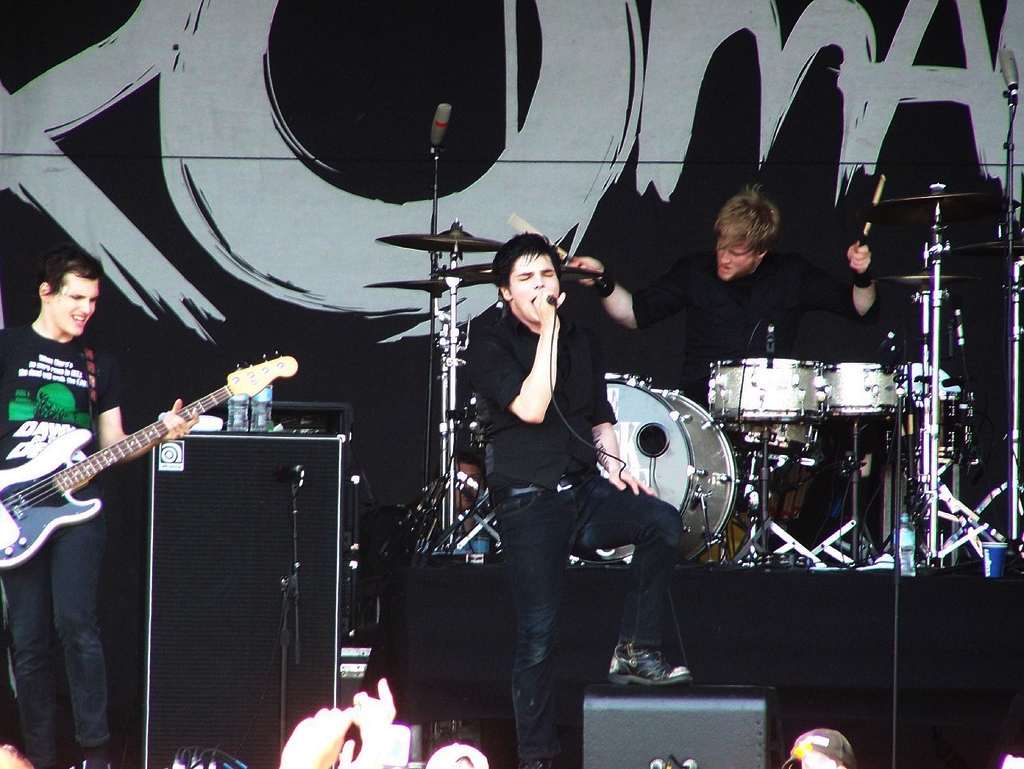
On November 12, 2024, My Chemical Romance announced a 10-date North American stadium tour built around full performances of the album. The announcement appeared on the band’s official site and was independently reported by the Associated Press.
Those events did more than celebrate the past. They repeatedly returned The Black Parade to public attention. By the time its 20th anniversary approached, the audience did not need to be introduced to the album. It needed a compelling reason to engage with it again.
The Anniversary Campaign That Changed Its Chart History
Reprise supplied that reason with The Black Parade (20th Anniversary Deluxe Edition), released on October 23, 2026. Apple Music lists the release date and Reprise copyright, while NME and Kerrang! reported the same date and label when the edition was announced.
The resulting chart movement was dramatic. On the Billboard 200 dated November 7, 2026, The Black Parade jumped from No. 139 to No. 1. Billboard and Variety, citing Luminate, reported that it earned 78,000 equivalent album units in the United States during the tracking week ending October 29.
That gave My Chemical Romance its first No. 1 album on the Billboard 200. Billboard, Variety and Rolling Stone also reported that the album’s approximately 20-year journey established the record for the longest wait between an album’s release and its first appearance at No. 1.
The timing produced a satisfying reversal. In 2006, an enormous opening week left the album one position short. In 2026, a reissue converted the record’s accumulated cultural value into a new weekly peak.
How Collectibles, Streaming and Chart Rules Worked Together
The comeback was led principally by album purchases. Billboard and Variety reported that traditional album sales accounted for 68,000 of the record’s 78,000 equivalent units. That makes the physical and collectible side of the anniversary campaign central to understanding the result.
An expanded edition gives devoted listeners something beyond access to familiar music. Fans who have streamed an album for years may still buy a new vinyl pressing, deluxe package, CD or cassette. For collectors, the object becomes part of the anniversary experience.
For this chart entry, Billboard combined qualifying configurations of The Black Parade rather than treating every eligible format as an unrelated release. Billboard’s Luminate-based account and Variety both connected the No. 1 result to the anniversary edition and the concentrated sales campaign surrounding it.
Streaming supplied another layer. Billboard and Variety reported that streaming-equivalent activity contributed to the remaining portion of the album’s total, although purchases overwhelmingly drove the week. Streaming had also allowed listeners to keep returning to the record between major physical campaigns.
The 78,000-unit total therefore represented more than one kind of behavior. It captured an organized burst of buying alongside continuing digital consumption of an album that had never fully disappeared.
The Same Album, Two Different Chart Eras
In 2006, the Billboard 200 was ranked through album sales. The Black Parade entered with approximately 240,000 copies sold, yet finished behind a soundtrack with an even larger total. Billboard’s archived chart, Spin and the Los Angeles Times all document that outcome.
By 2026, the Billboard 200 ranked releases through equivalent album units representing multiple forms of consumption, including album purchases, track sales and eligible streaming. Billboard’s chart methodology and Luminate’s documentation describe the modern chart as an album-equivalent measurement rather than a sales-only ranking.
Anniversary campaigns can also concentrate collector demand across qualifying configurations during a single tracking week. In the case of The Black Parade, that demand was powerful enough to send a 2006 album from No. 139 to No. 1.
That does not make the later achievement less meaningful or automatically easier. It means the route changed. The original campaign depended on winning a direct weekly sales contest during an album-purchasing era. The anniversary campaign could draw on physical collecting, deluxe-edition interest and the continuing activity of streaming listeners.
The chart systems measured different commercial environments, but both captured genuine demand. In the first, My Chemical Romance encountered a bigger release. In the second, the band successfully mobilized an audience built across two decades.
A Classic Album’s Second Commercial Life
The Black Parade finally reached No. 1 not because listeners suddenly discovered its importance, but because its anniversary campaign transformed enduring attention into chart-eligible activity at the right moment.
That is the larger lesson behind the delayed victory. An album’s commercial story no longer has to end when its original singles fade or its first tour closes. Streaming can keep it circulating, touring can renew its meaning, and carefully designed reissues can give longtime fans a reason to buy it again.
In 2006, The Black Parade lost the week. Over the next 20 years, it built the audience that allowed it to win another one.




Leave a Reply