


Macklemore was removed from the remaining U.S. dates of Ed Sheeran’s Loop Tour after several venues said they would not host the concerts with him on the bill. Those objections followed his two-show opening run at MetLife Stadium, where the rapper called for Palestinian freedom, criticized U.S. Immigration and Customs Enforcement and performed his protest song “Hind’s Hall” alongside images from Gaza. Robert Kraft confirmed that Macklemore would not be permitted to perform at Gillette Stadium, while promoter Messina Touring Group said venues on upcoming dates would not proceed with him. Sheeran said the final decision belonged to the promoter and venues, not to him personally.
That is the clearest answer available from public statements. No contracts or internal communications have been released to show exactly how the decision moved among the stadium owners, promoter and headlining artist.
What Happened at MetLife Stadium?
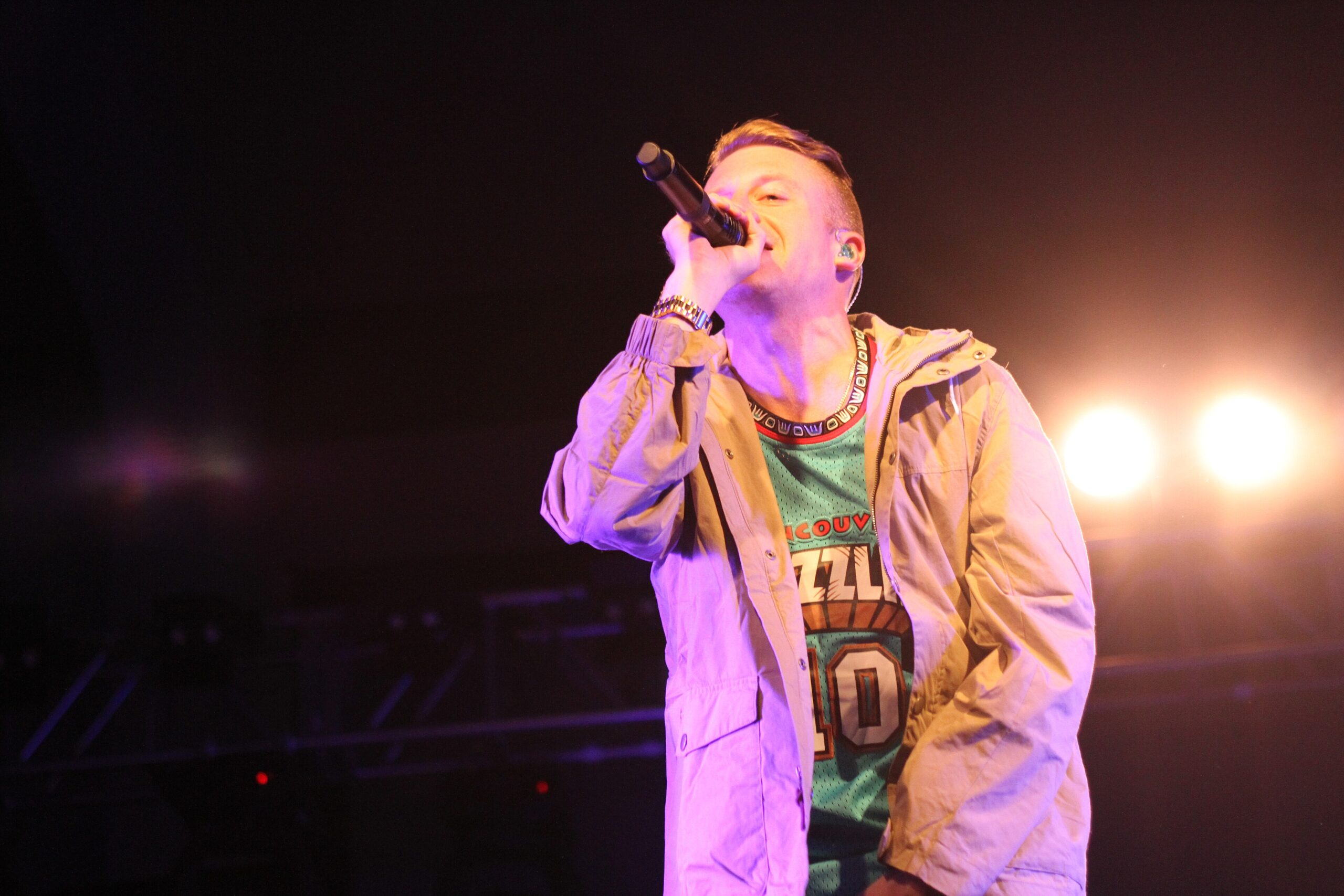
Macklemore opened for Sheeran at MetLife Stadium in New Jersey on September 4 and 5, 2026. Reports from NME and ABC documented his calls for a free Palestine, criticism of ICE and performance of “Hind’s Hall,” his 2024 protest song, while imagery from Gaza appeared on the stadium’s screens.
The performances quickly became controversial. On September 6, the Israeli American Council launched a petition calling for Macklemore’s removal from Sheeran’s lineup, and criticism of his performance spread online.
On September 14, Macklemore announced that he would no longer appear on the remaining U.S. dates of the Loop Tour. Messina Touring Group said that venues had notified the promoter that they would not allow concerts to proceed with Macklemore on the lineup.
The sequence is important: Macklemore made the remarks at MetLife, venue opposition followed, and his remaining appearances were canceled. However, the publicly available evidence does not establish every private conversation or prove that one individual controlled the entire process.
Who Actually Removed Macklemore?
The answer involves several parties rather than a single decision-maker.
The venues
Venue owners can prevent a concert or performer from appearing on their properties, although music-industry professionals told the Associated Press that stadium owners generally leave most show decisions to promoters.
Robert Kraft, whose Kraft Group owns Gillette Stadium in Massachusetts, confirmed that Macklemore would not be allowed to perform there on September 25 and 26. Kraft said the decision was based on Macklemore’s recent actions, material displayed during the MetLife performances and what Kraft characterized as a broader history of rhetoric and imagery offensive to Jewish people.
Messina Touring Group said Gillette Stadium was not the only venue that objected. According to the promoter, venues on upcoming U.S. dates were unwilling to host the concerts with Macklemore still on the bill. That resistance created the stated reason for removing him from the remaining shows.
The promoter
Messina Touring Group was the promoter of the U.S. leg of the Loop Tour. Its statement said keeping Macklemore on the lineup would cause venues to cancel shows and affect hundreds of thousands of fans.
Sheeran subsequently identified Messina as the party that removed Macklemore. The available statements do not reveal the relevant contract terms, the precise approval process or whether alternative arrangements were considered.
Ed Sheeran
Sheeran said on September 15 that Macklemore’s removal was the promoter’s decision and not his. He also said that he had spoken with venues and activists in an effort to reach a resolution but that the venues’ and promoter’s decision was final.
That distinction matters, but it should not be stretched beyond the known facts. Sheeran’s statement describes the final decision according to him. Without access to the tour contracts or internal discussions, it is impossible to determine how much formal authority or informal influence he could have exercised.
Macklemore
Macklemore said Sheeran told him that Kraft had contacted other stadium owners and helped organize opposition to his participation. Sheeran later confirmed speaking directly with Kraft and other venues, while Kraft publicly acknowledged his own decision concerning Gillette Stadium.
The available reporting does not independently establish the full extent of Kraft’s communications with other owners. In other words, the public record confirms that several venues objected, but it does not fully confirm Macklemore’s account of how those objections were organized.
Why “Hind’s Hall” Became Central to the Dispute
Macklemore first shared “Hind’s Hall” in May 2024. Its title refers to the name pro-Palestinian demonstrators occupying Columbia University’s Hamilton Hall gave the building in memory of Hind Rajab, a Palestinian child killed in Gaza.
The song supports the student protest movement, calls for a ceasefire and criticizes the United States’ role in the war. Macklemore said its streaming proceeds would go to UNRWA USA, which raises money in support of the United Nations agency serving Palestinian refugees.
The Associated Press later reported that Macklemore also pledged the proceeds and streaming royalties from the song and its sequel, “Hind’s Hall 2,” to UNRWA USA. By performing “Hind’s Hall” at MetLife with Gaza imagery, Macklemore brought a campaign already associated with his music into one of the country’s largest concert settings.
That choice made “Hind’s Hall” more than another song in an opening set. It became the focal point of a dispute about political expression, audience expectations and the authority of venue owners.
What Macklemore Did After Leaving the Tour
Macklemore did not retreat from the message that preceded the controversy. On September 24, he announced benefit concerts in Dublin, Paris and London, scheduled for October 26, 29 and 30. The proceeds were designated for organizations supporting Palestinian aid and advocacy.
He then appeared at Colorado’s Red Rocks Amphitheatre on October 22, his first reported concert after leaving the Loop Tour. Billboard and NME reported that he again called for Palestinian freedom, spoke about suffering in Sudan, Congo, Lebanon and Haiti, and addressed fear surrounding ICE activity in the United States.
Macklemore framed those remarks as a response to human suffering rather than party politics. He ended the passage by saying his message would remain one of love.
The Red Rocks appearance showed that his removal from Sheeran’s tour had not changed the substance of his performances. Instead, he continued presenting political and humanitarian advocacy as a central part of his work.
What the Dispute Reveals About Stadium Tours
A tour may carry one artist’s name without every decision being made by that artist alone. Music-industry professionals interviewed by the Associated Press said major tours divide influence among headliners, promoters and venue owners, although superstar artists ordinarily retain substantial approval over what happens under their names.
In this case, venue owners exercised their ability to reject Macklemore’s participation. The promoter said it faced the prospect of canceled concerts if he remained. Sheeran was the headliner whose name sold the shows, but he said the removal decision was not his and that his efforts to reach a compromise failed. Macklemore, meanwhile, believed the venue opposition had been coordinated.
The result illustrates why asking whether Ed Sheeran “removed” Macklemore is too simple. The confirmed explanation is that several venues refused to proceed with Macklemore after his MetLife performances, and the promoter removed him from the remaining U.S. dates. The exact balance of authority and influence behind that outcome remains private.




Leave a Reply