

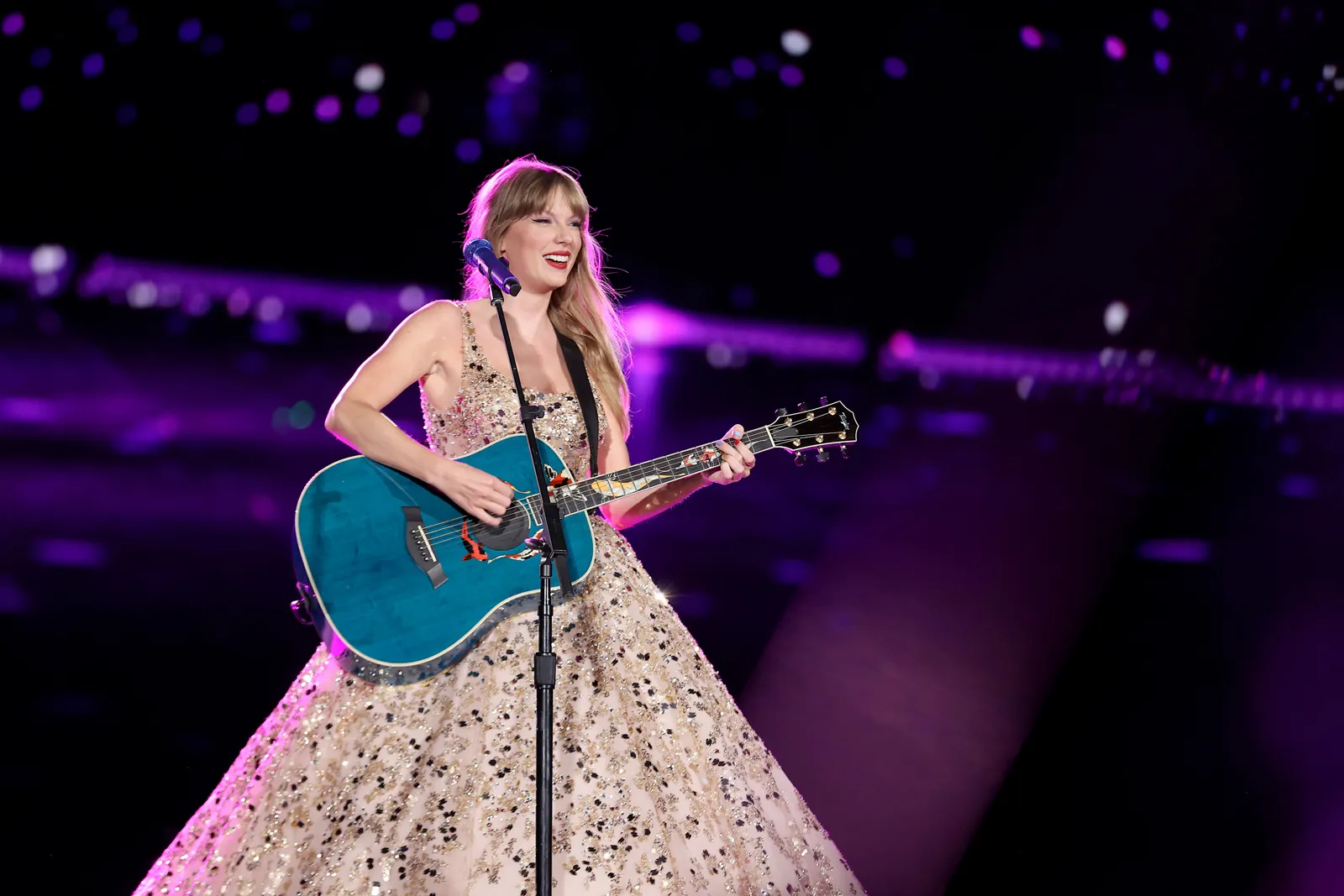
Taylor Swift’s The Life of a Showgirl returned to No. 1 because Billboard combined activity from the original album and its expanded Encore edition under one chart title. Four new songs renewed interest in the nearly year-old release, helping it leap from No. 21 to No. 1 on the Billboard 200 dated October 10, 2026. According to Billboard and Variety, the combined versions earned 173,000 equivalent album units, led overwhelmingly by streaming. The result gave Showgirl its 13th nonconsecutive week at the top.
The comeback was therefore more than a burst of attention around four tracks. It was a second release cycle in which new and existing listening flowed into the same chart total.
What The Encore Added
Released digitally on September 25, 2026, The Life of a Showgirl: The Encore expanded the original 12-track album to 16 songs. Universal Music Japan, the Associated Press and Variety identified the additions as “Patient Zero,” “Cleveland!,” “Pink Clouding” and “Babylon.”
The timing gave fans a reason to return to an album that had arrived on October 3, 2025. It also provided streaming platforms, digital retailers and music publications with a new event to promote as the original release approached its first anniversary.
Swift said the songs grew out of a trip to Sweden, where she met with Max Martin and Shellback to celebrate the album’s success. According to her account, as reproduced by Universal Music Japan and the Associated Press, the collaborators found themselves near a studio and began writing again. That session turned an anniversary visit into an extension of the album.
The four songs mattered because they supplied something genuinely new without separating that activity from the existing project. Listeners could sample the additions, replay the original tracks or move through the complete 16-song edition. Under Billboard’s treatment of the release, all of that consumption benefited The Life of a Showgirl.
The 173,000 Units Behind the Comeback
Billboard and Variety, citing Luminate, reported that The Life of a Showgirl earned 173,000 equivalent album units in the United States during the tracking week ending October 1.
That total broke down as follows:
| Measurement | Total |
|---|---|
| Equivalent album units | 173,000 |
| Streaming-equivalent album units | 136,000 |
| Album sales | 21,000 |
| Track-equivalent album units | 16,000 |
| Official on-demand streams | 138.79 million |
“Equivalent album units” is Billboard’s way of measuring several forms of music consumption together. Traditional album purchases count alongside converted totals from individual song sales and streams. The system allows the Billboard 200 to reflect how audiences now encounter albums rather than relying on full-album sales alone.
Streaming-equivalent units supplied about 79 percent of Showgirl’s weekly total. The album’s songs generated 138.79 million official on-demand streams, making streaming the clear engine of the return. Still, the result was not exclusively driven by streams: album sales and track-equivalent units contributed another 37,000 units combined.
Billboard and Variety reported that the four new songs generated much of the renewed activity. Public figures, however, do not separate their individual performance from listening to the original tracks. It would therefore be inaccurate to say that the additions alone produced all 173,000 units.
Why Billboard Counted Both Editions Together
The decisive chart detail is that The Encore was not treated as a separate album.
Billboard grouped consumption of the expanded edition with activity from the original The Life of a Showgirl. Streams and purchases across both versions fed one weekly total, which retained the original album’s chart history.
That accounting explains how a release sitting at No. 21 could suddenly return to No. 1. The new songs attracted attention, but the chart credited that attention to an album already in circulation. At the same time, continued listening to the original tracks remained part of the calculation.
The distinction matters. The Encore did not begin an independent Billboard 200 run and compete against The Life of a Showgirl. Instead, it refreshed the existing album strongly enough for their combined activity to overtake every other title that week.
This does not mean every deluxe edition will necessarily be handled in exactly the same way. It explains how Billboard counted this particular release: as an expanded version of the same album rather than a new chart entry.
A Streaming-Led Rebound
The return is also notable for what did not drive it. Billboard and Variety reported that the expanded edition was available through streaming services and digital download during the measured week, with no physical Encore edition contributing to the total.
That separates the comeback from album campaigns built around a large shipment of vinyl, CDs or collectible physical variants. Here, the largest component came from people streaming the music.
Digital access also made the transition from old edition to new edition immediate. Once The Encore arrived, listeners could encounter the additional tracks inside an expanded version of an album already familiar to them. New-song streams could sit beside renewed plays of the established track list, allowing discovery and rediscovery to happen within the same release.
The Album’s Second Release Cycle
The Life of a Showgirl had already experienced an enormous opening. The Associated Press, Variety and Universal Music Japan reported that it debuted with 4.002 million equivalent album units, the largest measured week since Luminate’s modern tracking era began in 1991. It became Swift’s 15th No. 1 album on the Billboard 200.
Its first run at the summit eventually paused after the chart dated January 10, 2026, when the album logged its 12th week at No. 1. By the time The Encore appeared in September, the project was an established release rather than a conventional new album.
The expansion changed that position. Four songs created a fresh announcement, a fresh listening occasion and a fresh reason to discuss the album. Because Billboard attached the resulting activity to the existing title, the campaign gained momentum without starting over.
That is the broader lesson of the comeback. In the streaming era, an album’s release cycle can be reopened. A carefully timed expansion can direct attention toward new material while also reviving the larger body of work around it.
Taylor Swift’s Showgirl returned to No. 1 not because The Encore was counted as a brand-new hit album, but because it made an existing album feel current again. Billboard combined the two editions, streaming supplied most of the units, and one album began a second act without losing the chart history of its first.










Leave a Reply