


Isaac Slade opened Ed Sheeran’s October 3 concert in Atlanta after the Loop Tour lost Macklemore and four other scheduled performers. Macklemore was removed from his remaining support dates, while Finneas, Lukas Graham, Aaron Rowe and Beoga withdrew from planned appearances or performances in solidarity with him. Slade was a plausible choice: the former Fray singer had joined Sheeran onstage in Toronto weeks earlier, and Sheeran had described Slade’s music and songwriting as a formative teenage influence. Still, the available reporting confirms Slade only for the Atlanta show. No official source has said he permanently replaced Macklemore or disclosed exactly why he was selected.
What Isaac Slade Did in Atlanta
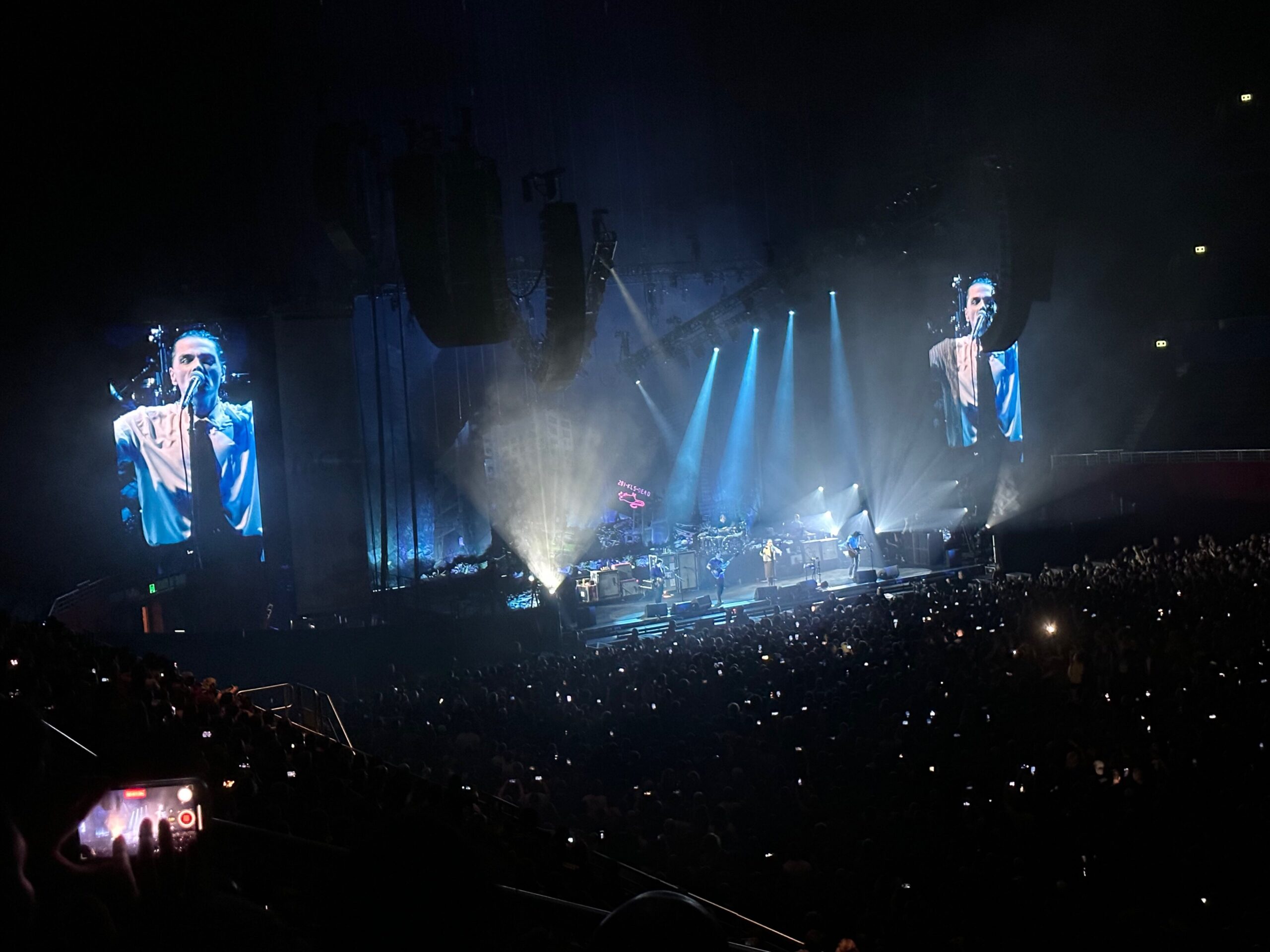
Slade performed a short opening set at Mercedes-Benz Stadium, according to USA Today and an Atlanta Journal-Constitution review by a reporter at the concert. It included two of The Fray’s best-known songs, “How to Save a Life” and “You Found Me.”
He also addressed the subject at the center of the tour’s controversy: Gaza. USA Today, the Atlanta Journal-Constitution and Newsweek reported that Slade called what was happening there wrong and encouraged listeners to step into a “middle place” or “common ground.” He also said, “We will find a way through this together.”
That made his appearance more complicated than a routine replacement booking. Slade did not avoid the political issue that preceded Macklemore’s removal. Instead, he approached it differently, emphasizing reconciliation and the need to understand opposing perspectives rather than repeating Macklemore’s direct protest.
Both Macklemore and Slade therefore addressed Gaza while appearing on Sheeran’s tour, but the tone and form of their messages differed sharply.
Why Slade Was a Natural Choice
Slade already had a connection to Sheeran and the Loop Tour.
On August 22, Slade joined Sheeran and Irish band Beoga at Toronto’s Rogers Centre for a performance of “How to Save a Life.” JamBase documented the appearance, while later USA Today and Newsweek reports referenced it when covering the Atlanta show.
Sheeran told the Toronto audience that he had been a fan of Slade’s music and songwriting during his teenage “formative years.” Bringing Slade to Atlanta therefore had an evident artistic logic: he was a recent collaborator with recognizable songs and an established connection to the headliner.
Slade also carried his own history. He had served as The Fray’s lead singer from the band’s formation in 2002 until announcing his departure in 2022. American Songwriter and JamBase both documented his departure.
But that context explains only why Slade was a credible option. It does not establish who approached him, when the Atlanta booking was arranged or whether other performers were considered.
How Macklemore’s Opening Slot Became Vacant
The lineup crisis followed Sheeran’s September 4 and 5 concerts at MetLife Stadium.
Across those two supporting sets, Macklemore expressed solidarity with Palestinians, said “Free Palestine,” performed his protest song “Hind’s Hall” and defended criticism of the Israeli government as distinct from criticism of Jewish people. The Associated Press, Business Insider and Variety reported on the performances, although AP and Business Insider differ over which night featured the “Free Palestine” introduction to “Hind’s Hall.”
On September 14, Messina Touring Group announced that Macklemore would not appear on the remaining support dates. The promoter said venues for upcoming U.S. shows had notified it that they would not permit concerts with Macklemore on the lineup.
Macklemore initially said Sheeran and Sheeran’s team had decided to remove him. Sheeran disputed personal responsibility, saying he had tried to find a solution but that the promoter and venues made the final decision.
Those public accounts remain in conflict.
Who Actually Removed Macklemore?
The available accounts point to several decision-makers rather than one undisputed authority.
Macklemore said Sheeran’s organization removed him. He also alleged that Robert Kraft—whose Kraft Group owns Gillette Stadium—told Sheeran that Macklemore could not perform there and had rallied other stadium owners to take the same position.
Sheeran said Macklemore’s contract was with Messina Touring Group and that the promoter and venues made the final decision. He argued that canceling concerts would also affect fans, touring personnel and other performers who depended on the shows for work.
Messina said multiple venues had warned that concerts carrying Macklemore would not be allowed to proceed. Kraft separately confirmed that Macklemore would not be permitted to perform at Gillette Stadium, citing the rapper’s recent conduct and what Kraft characterized as a broader history of antisemitic imagery and rhetoric. Kraft’s statement did not confirm Macklemore’s allegation that he pressured other stadium owners.
The narrowest conclusion supported by the public statements is that Gillette Stadium rejected Macklemore, Messina reported objections from additional venues, and the promoter then announced that he would not perform on the remaining support dates. The available statements do not establish one uncontested final decision-maker across every concert.
Four More Acts Leave the Tour
Macklemore’s removal created a larger problem when other performers chose to leave.
On September 15, Finneas, Lukas Graham, Aaron Rowe and Beoga announced that they were withdrawing from scheduled Loop Tour appearances or performances. The Associated Press and USA Today reported the four departures and the artists’ statements supporting Macklemore or opposing the suppression of artists’ speech.
Their roles were not identical. Aaron Rowe and Lukas Graham were scheduled for remaining U.S. dates, Finneas was due to join Sheeran in South America, and Beoga had been accompanying Sheeran during part of his own set.
Those exits widened the gaps in Sheeran’s touring lineup. They also demonstrated that supporting performers have their own agency and can withdraw when a tour’s decisions conflict with their principles.
By the time Slade appeared in Atlanta, he was stepping into a concert lineup reshaped by both removal and protest.
Who Controls a Stadium Tour?
A stadium tour may be marketed around one superstar, but its operation involves several parties.
Industry professionals interviewed by the Associated Press described the promoter as the principal business operator: it finances the production, contracts performers, sells tickets and works with venues. Industry research and corporate filings likewise describe promoters as assuming financial risk and contracting with artists and venue operators.
The headliner can still carry enormous influence because the tour depends on that artist’s reputation and ticket demand. Experts interviewed by AP said artists capable of filling stadiums normally retain substantial approval, even when a promoter handles contracts and financing. Venue operators also retain control over access to their buildings and can refuse a proposed performer.
That shared structure helps explain why Sheeran could be the tour’s public face while Messina held Macklemore’s contract and individual stadiums could threaten to reject the lineup.
It does not reveal the precise terms of Sheeran’s agreements with Messina or the venues. It does show why a headliner, promoter and stadium operator could each influence the result without their public descriptions of the process being identical.
What Slade’s Appearance Really Means
Slade’s Atlanta set should not be treated as proof that Sheeran chose one political message over another. No official account has established that motive.
What the appearance does reveal is how quickly a major tour can be transformed when political speech collides with business relationships. Macklemore delivered an explicit protest, venues objected, Messina removed him from the remaining support dates, and four other acts departed. Slade then filled an opening slot in Atlanta and addressed the same conflict in more conciliatory terms.
For now, he is best described as Sheeran’s Atlanta opener—not Macklemore’s confirmed permanent replacement. The broader story is less about one singer taking another’s place than about who gets to speak, who gets to perform and who ultimately controls the stage.








Leave a Reply