

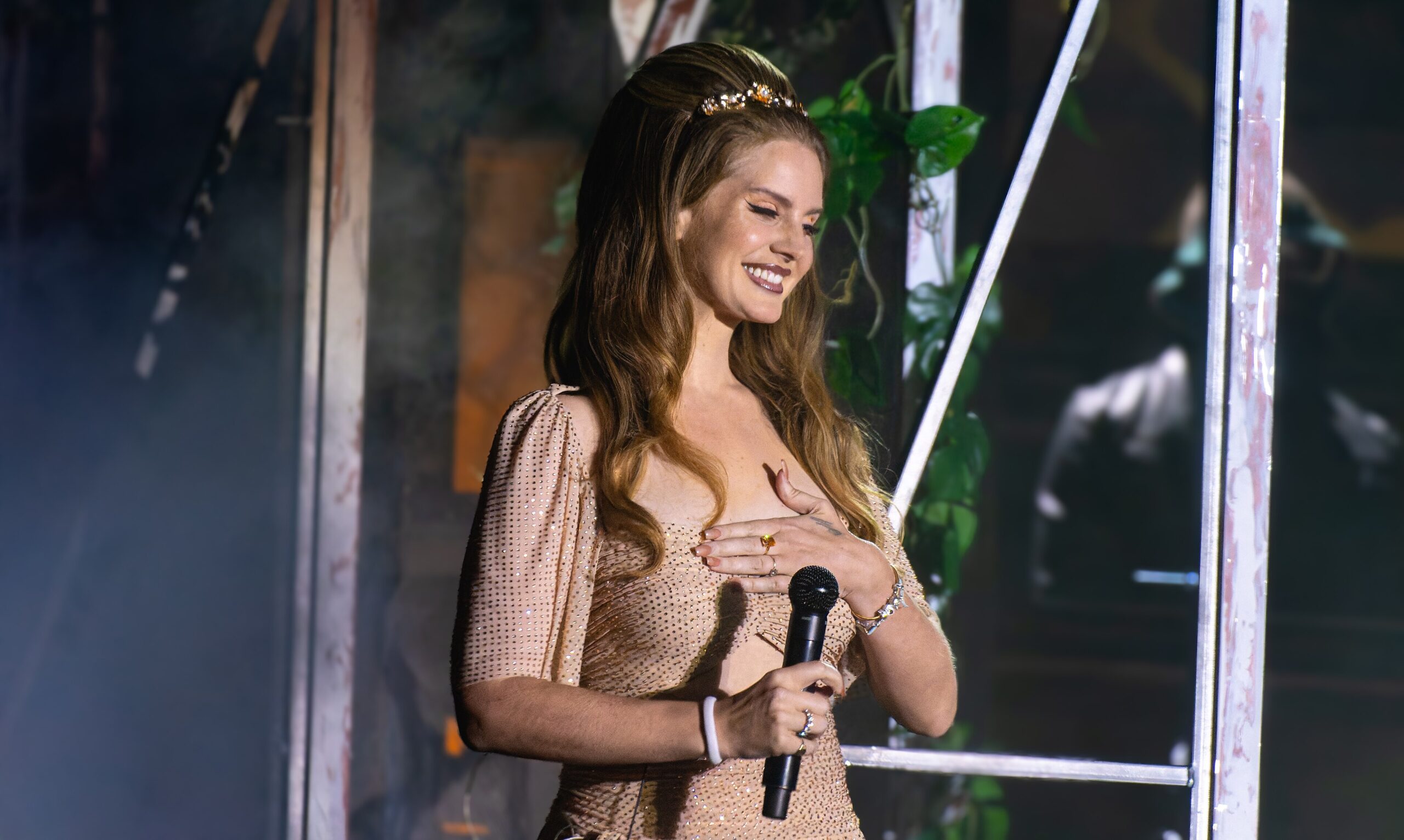
Zach Bryan and Lana Del Rey have not publicly given a definitive reason for collaborating on “Lies.” Del Rey confirmed in September 2026 that they had finished a song together, but neither artist explained who proposed the duet or why they chose each other. The clearest answer comes from the music around it: both artists write about longing, memory, damaged romance and the stories people tell themselves when love begins to fail. Bryan usually approaches those subjects through plainspoken country and folk songwriting; Del Rey tends to frame them through cinematic alternative pop and Americana imagery. “Lies” brings those parallel instincts together without requiring either artist to abandon a recognizable identity.
What We Know About “Lies”
“Lies” appears as the third track on Bryan’s eight-song EP Young Manhood and Other Donatable Organs, released October 16, 2026. Apple Music and Amazon Music identify Del Rey as the featured artist, while Pitchfork, Rolling Stone, Stereogum and Consequence also reported the collaboration.
The EP gives the duet useful context. Its other featured performance is “Plainsman” with Turnpike Troubadours, the Oklahoma group closely associated with Red Dirt music. That pairing draws Bryan toward his regional roots, while “Lies” connects him with an artist associated with alternative pop and a cinematic form of Americana.
Together, those choices make the project feel deliberately broad without turning it into a rejection of country music. Bryan is working with one act that reinforces where he came from and another that shows how far his style can travel.
Some of the collaboration’s public timeline is clearer than initially reported. In September, Del Rey posted images and video involving Bryan and announced that they had finished “our song,” adding a wordplay-heavy reference to “Lie.” Billboard described the material as appearing to document a recent session in Massachusetts. Rolling Stone later reported that “Lies,” like the rest of the EP, was cut at Easy Eye Sound in Nashville. The available reports do not explain what work occurred in each location.
What remains unknown is why the collaboration happened. Neither artist nor their representatives have provided a confirmed public account of who initiated the song or why Del Rey was selected. Any claim about a private friendship, label strategy or calculated attempt to produce a hit would therefore go beyond the available evidence.
Two Styles With Common Emotional Ground
Bryan’s rise has been tied to emotional clarity. Recording Academy and TIDAL profiles trace his early audience to music he released while serving in the U.S. Navy, beginning with DeAnn in 2019 and followed by Elisabeth in 2020. His major-label breakthrough came with American Heartbreak in 2022.
Across that path, Bryan built a writing style that often feels conversational rather than polished for distance. His songs return to home, loyalty, restlessness, regret and relationships that remain emotionally complicated after they end. Even as his venues and audience have grown, the writing still depends on the impression that one person is trying to say something difficult as directly as possible.
Del Rey arrives from a different musical world, but she frequently works with related material. The Recording Academy describes her work through cinematic songwriting, melancholic lyricism and a nostalgic mixture of pop and Americana, while AllMusic emphasizes her carefully constructed characters, romantic melancholy and increasingly direct songwriting.
That difference is what makes the pairing useful. Bryan brings the force of direct confession. Del Rey brings a voice naturally associated with atmosphere, romantic illusion and emotional danger. Their genre labels may suggest an unlikely match, but their songs regularly occupy neighboring emotional territory.
“Lies” can therefore be understood as a meeting of methods rather than a collision of unrelated styles. Bryan and Del Rey do not need to sound identical to make sense together. They only need to approach the same emotional problem from distinct angles.
The Kacey Musgraves Precedent
Bryan had already demonstrated how effectively a prominent duet partner could widen one of his songs without displacing his voice.
“I Remember Everything,” his collaboration with Kacey Musgraves, won Best Country Duo/Group Performance at the 2024 Grammy Awards. Recording Academy records show it remains Bryan’s first Grammy victory, and Pitchfork independently reported the win. The song placed two recognizable writers inside the same troubled relationship, allowing the contrasting perspectives to deepen the story.
That success offers a clear career precedent for “Lies,” though it does not prove Bryan was attempting to repeat a formula. In both cases, the guest is more than an ornamental name attached to a release. Musgraves and Del Rey each bring an established storytelling identity that changes how the central relationship can be heard.
The comparison also shows why collaborations suit Bryan’s writing. His songs are often intimate enough to stand alone, but a second voice can turn a private recollection into a contested memory. What sounded like one narrator’s truth becomes a conversation between people who may not remember love—or its collapse—the same way.
Expansion Without a Break From Country
It would be too simple to describe Del Rey’s appearance as evidence that Bryan is “going pop.” The full EP points in two directions at once.
Oklahoma’s tourism authority describes Turnpike Troubadours as an Oklahoma band helping Red Dirt music thrive, while the Recording Academy identifies the group as one of the scene’s central modern acts. Featuring the group on “Plainsman” places Bryan beside musicians connected to the regional tradition underlying much of his work.
Del Rey broadens the frame in another direction. Her presence gives “Lies” an immediate connection to alternative pop and to a form of Americana shaped as much by cinema, mythology and mood as by country convention.
Those collaborations do different jobs, but they are not contradictory. Turnpike Troubadours emphasize Bryan’s roots. Del Rey demonstrates that his central subjects can remain legible outside a strictly country setting. The EP’s guest list presents expansion and continuity as parts of the same project.
That balance matters because Bryan’s crossover appeal has never depended entirely on changing genres. It has depended on making emotionally direct songs that listeners from several genres can recognize as their own.
What the Collaboration Suggests
The pattern suggests that Bryan increasingly uses collaborations to introduce a new perspective while keeping his songwriting identity at the center. “I Remember Everything” paired him with an artist fluent in country and pop. “Lies” extends that approach through a collaborator more closely associated with alternative pop and cinematic Americana.
Del Rey gives the song access to a different vocal and imaginative world. Bryan, in turn, offers a setting grounded in the country, folk and Red Dirt traditions that shaped his career. Each artist expands the other’s context without making the collaboration feel like a costume change.
It is reasonable to view that as crossover in effect. It is not yet possible to call it a confirmed business strategy, because Bryan and his representatives have not publicly described it that way. The distinction matters: the finished recording shows artistic compatibility, but it cannot establish private motives.
The Best Available Answer
Why did Zach Bryan collaborate with Lana Del Rey on “Lies”? The honest answer is that only the artists know the specific reason, and they have not publicly supplied it.
The artistic logic is easier to see. Bryan and Del Rey have built distinct careers around unstable love, memory, longing and American imagery. He tends to make those feelings sound immediate and unguarded; she often makes them feel cinematic and haunted. “Lies” joins those approaches at a point where their differences sharpen the same story.
For Bryan, the duet also continues an expansion already visible in his work with Kacey Musgraves. He is widening his collaborative circle, but the foundation remains intact: emotionally direct songwriting strong enough to cross genre lines without losing its identity.








Leave a Reply