

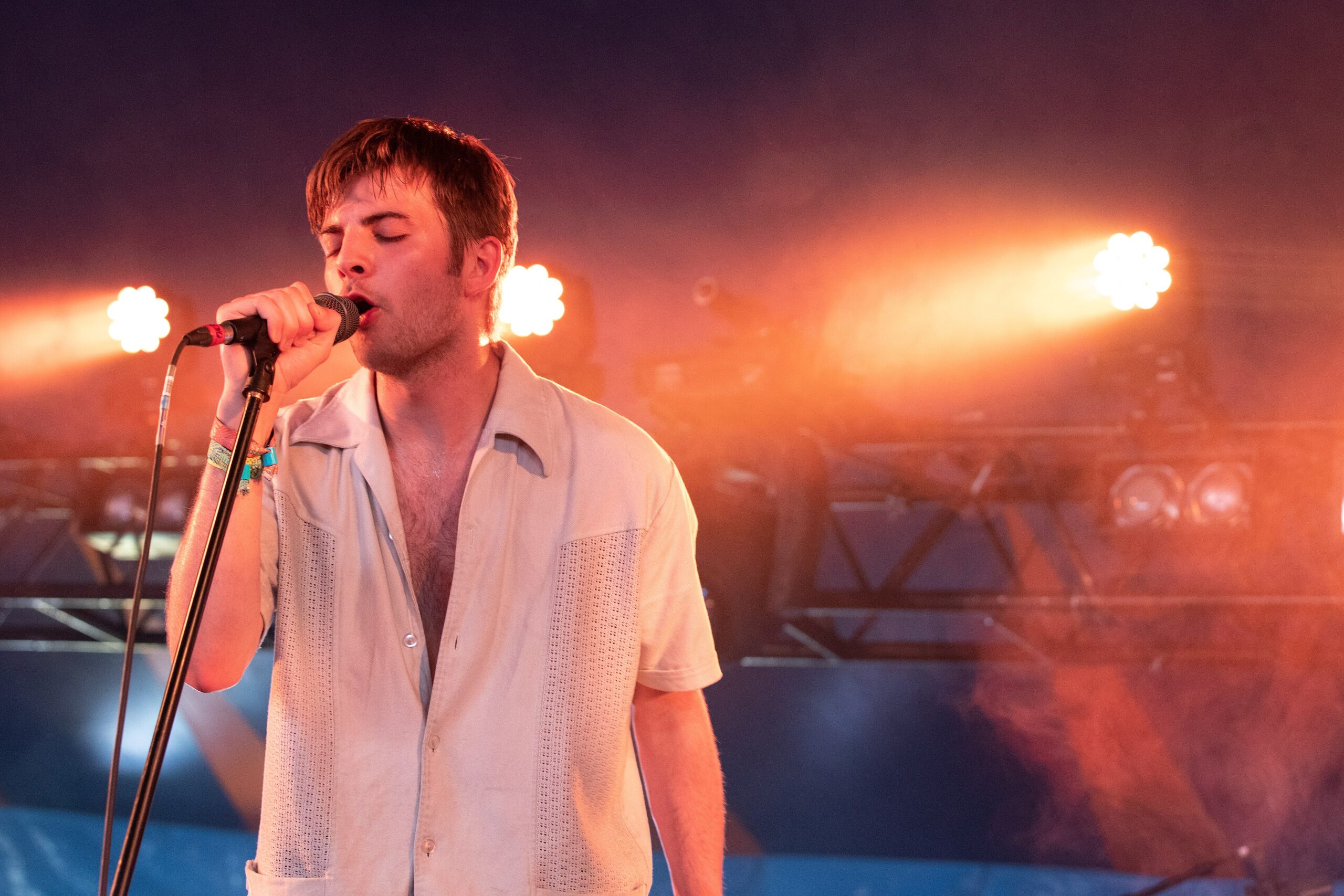
The clearest public explanation for Fontaines D.C.’s collaboration with Rosalía comes from guitarist Carlos O’Connell, who recognized a shared creative philosophy between them. In statements reported by Pitchfork, SPIN and Rolling Stone UK, O’Connell drew a parallel between Rosalía’s preservation and reinvention of Spanish musical traditions—beginning with her 2017 debut, Los Ángeles—and his band’s engagement with Irish music and identity. That connection makes “Where Is Gone?” less an unlikely crossover than a meeting between artists who treat tradition as something living: worth preserving, but also reshaping.
The Connection Carlos O’Connell Heard
On the surface, Fontaines D.C. and Rosalía occupy different musical worlds. One emerged from Dublin’s rock scene; the other built her early work around flamenco before moving through experimental pop, electronic production and international collaborations.
O’Connell’s explanation looks beneath those differences. In comments carried by Pitchfork, SPIN and Rolling Stone UK, he described a spiritual connection between Rosalía’s approach to Spanish tradition and Fontaines D.C.’s relationship with Irish music. El País separately reported him making a similar comparison while discussing the collaboration with Triple J.
His point was not that the two artists sound alike. They do not. The connection lies in how they use cultural inheritance.
Both have drawn from traditions closely tied to place, language and national identity without treating those traditions as museum pieces. Their music asks how inherited forms can remain recognizable while being placed in new settings.
That is the clearest documented answer to why Rosalía made sense to Fontaines D.C. An interview with band members Conor Deegan and Tom Coll in The Irish Times adds that the group had respected her music for years and that Coll and O’Connell had attended one of her concerts. The available accounts explain the band’s artistic interest in her, although they do not establish who first suggested the duet or how the collaboration was arranged.
Why Los Ángeles Matters
O’Connell specifically identified Rosalía’s debut album when discussing the connection. El País named that record as Los Ángeles, which Apple Music and contemporary RTVE reporting confirm was released on February 10, 2017.
The album was grounded in flamenco material while presenting it through a distinctly contemporary sensibility. RTVE documented how Rosalía and guitarist-producer Raül Refree drew on older cantes while transforming their melodies, arrangements and presentation rather than simply reproducing them.
That distinction helps explain O’Connell’s admiration. Preservation can imply keeping a tradition unchanged. Rosalía’s early work instead demonstrated that respect and transformation can happen at the same time.
Listeners who encountered her through the brighter, more technologically adventurous music that followed may hear Los Ángeles as a key to the collaboration. Before Rosalía became widely associated with boundary-crossing pop, she had already established an approach based on entering a tradition deeply enough to alter its presentation from within.
Fontaines D.C. have followed a different musical path, but the underlying question is familiar: How can artists carry their cultural background forward without allowing it to limit them?
Fontaines D.C.’s Expanding Sense of Place
Fontaines D.C.’s development can be traced across five studio albums: Dogrel in 2019, A Hero’s Death in 2020, Skinty Fia in 2022, Romance in 2024 and Dopamine Chamber in 2026. The sequence is documented by the band’s official discography and corroborated by AllMusic.
The group’s earliest work was closely associated with Dublin, but its music has steadily expanded beyond the direct, guitar-driven urgency that first defined it. That expansion does not necessarily amount to leaving Irish identity behind. Instead, the band has continued to explore belonging, displacement and inheritance through a broader musical vocabulary.
Rosalía fits that trajectory because she represents another way of moving outward without severing the connection to where the music began. Her presence allows Fontaines D.C. to place their cultural questions beside those of an artist from a different tradition.
The result is not a comparison that erases distinctions between Irish music and flamenco. It is a conversation between two approaches to modernization.
Why the Sound of “Where Is Gone?” Matters
Released on October 12, 2026, “Where Is Gone?” presents Grian Chatten and Rosalía as contrasting but complementary vocalists. Apple Music confirms the release date, while Stereogum, SPIN and Rolling Stone UK describe the recording as a slow, string-laden or orchestrated ballad built around the interplay between their voices.
That restraint is important. The collaboration is not built as a contest between two recognizable performers, nor does it force either artist into a simplified version of the other’s style. Instead, the arrangement gives their voices room to retain separate identities within the same song.
SPIN and Rolling Stone UK credit James Ford with producing the track. Fontaines D.C.’s Bandcamp listing and Pitchfork also identify Ford as the producer of Dopamine Chamber. Ford produced the band’s preceding album, Romance, which was released on August 23, 2024, as confirmed by Fontaines D.C., XL Recordings and AllMusic.
“Where Is Gone?” therefore belongs to a continuing period of sonic expansion for the band. Its orchestral scale and measured pace point toward the wider palette surrounding Dopamine Chamber, which the band’s official album notes describe as colder, stranger and more synthetic than its earlier records.
Why the First Guest Feature Is Significant
Rosalía is the first guest artist to appear on a Fontaines D.C. studio album, according to Stereogum, SPIN, Rolling Stone UK and El País. That makes her inclusion more consequential than an ordinary featured-vocal credit.
The distinction does not prove anything about the band’s commercial intentions. It does, however, make the artistic logic behind the choice especially relevant. Fontaines D.C. reached the fifth studio album of their career before bringing another named artist into the foreground of one of their records. Rosalía’s connection to the album is rooted in a creative idea the band has articulated: tradition can remain meaningful even as its sound changes.
The song also serves a clear role in the album campaign. Stereogum, SPIN and Rolling Stone UK identify “Where Is Gone?” as the third preview of Dopamine Chamber, following “Marianne” and “Tongue.” The album is scheduled for release through XL Recordings on October 16, 2026, according to the band’s official discography, its Bandcamp page, XL Recordings and Pitchfork.
Placed four days before the album, the duet offers more than celebrity surprise. It helps define the record’s reach.
A Collaboration Built on Productive Difference
“Where Is Gone?” works because Fontaines D.C. and Rosalía do not come from identical traditions or make interchangeable music. The collaboration depends on the distance between them.
What connects the artists is their willingness to treat cultural identity as raw material rather than a fixed set of rules. Rosalía’s Los Ángeles gave O’Connell a model of how old forms could be preserved through reinvention. Fontaines D.C.’s own journey—from the Dublin-centered world of Dogrel toward the wider orchestral and synthetic palette of Dopamine Chamber—has been driven by a comparable desire to expand without becoming culturally weightless.
Rosalía is therefore more than the first guest on a Fontaines D.C. studio album. She is a collaborator whose artistic history helps explain the band’s interest in her. Their duet suggests that tradition and experimentation are not opposing forces. In the hands of artists willing to question what they inherit, each can keep the other alive.





Leave a Reply