

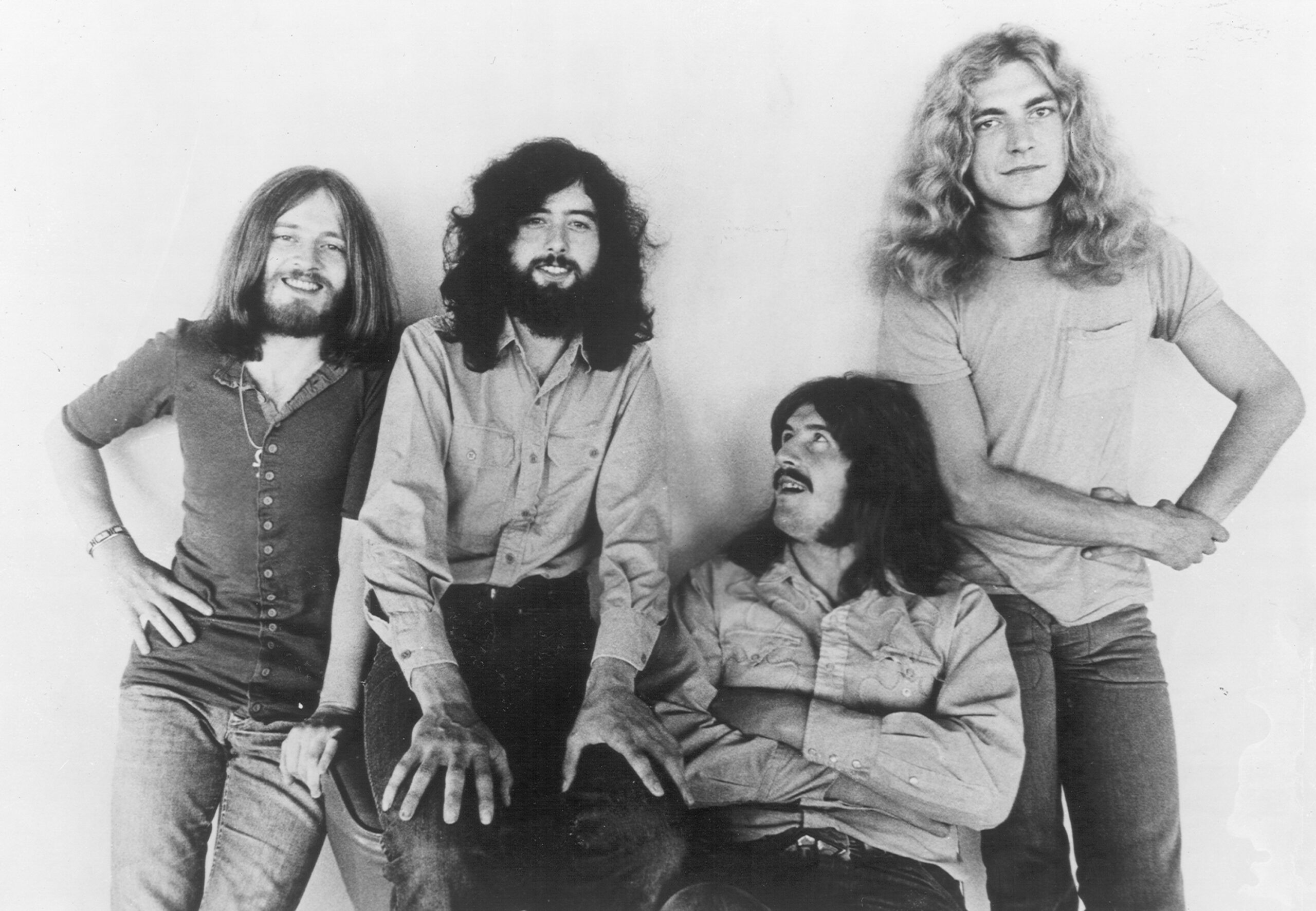
Greta Gerwig secured “Stairway to Heaven” for the first trailer for Narnia: The Magician’s Nephew after making a personal and artistic case to Jimmy Page and Robert Plant. Gerwig said she showed the musicians an early cut and explained how the song’s spiritual movement complemented a story about the creation of Narnia. Page subsequently confirmed their meeting and expressed enthusiasm about her choice of music. The result suggests that access to a carefully managed recording can depend on context and trust—not simply the size of a licensing offer.
A Familiar Guitar Enters Narnia
Netflix released the first trailer for The Magician’s Nephew on October 13, 2026. Its use of Led Zeppelin’s recording immediately gave the images a sense of discovery, mystery and increasing scale.
That effect is built into “Stairway to Heaven.” The recording begins quietly, with Page’s acoustic guitar followed by John Paul Jones’s recorder, creating an intimate, almost ancient atmosphere. Plant’s vocal joins that restrained opening. The arrangement then expands steadily until Page’s electric guitar and John Bonham’s drums drive it toward a towering rock climax.
For a trailer, that progression is unusually useful. It provides a ready-made path from curiosity to awe.
But this was not a routine soundtrack selection. Page and Plant had repeatedly declined requests to place “Stairway to Heaven” in films, while Plant has described Led Zeppelin licensing decisions as collective judgments that depend on whether the music suits the scene. That raises the obvious question: How did Gerwig get permission?
Greta Gerwig Took the Film to Page and Plant
Gerwig’s answer was personal.
As reported by Variety and SPIN, she said she showed an early cut of the film to Page and Plant and discussed its themes with them. The Associated Press and Billboard also reported that she met the musicians to secure permission and connected their response to an appreciation for the work of C.S. Lewis.
That detail matters. Page and Plant are not merely famous members of Led Zeppelin; they are the credited writers of “Stairway to Heaven.” Gerwig was presenting her interpretation to two of the people most closely associated with the song’s creation and legacy.
Page later confirmed the meeting in an Instagram post and said he was pleased that Gerwig had selected “Stairway to Heaven” for the trailer. He did not publicly describe the licensing negotiations or say precisely what persuaded him. No comparable public statement from Plant about this particular placement was located.
The fullest explanation therefore remains Gerwig’s account: she did more than request a valuable piece of music. She gave its creators a reason to see the placement as part of a larger artistic idea.
Why “Stairway” Fits a Creation Story
Netflix and the Associated Press describe The Magician’s Nephew as a creation story: an account of Narnia’s beginnings adapted from C.S. Lewis’s 1955 novel.
Gerwig described “Stairway to Heaven” as an epic built around a spiritual quest, false idols and the choice between different paths. SPIN and Rolling Stone reported her explanation that those ideas paralleled the story she was telling.
The connection does not require the song to narrate the movie literally. Its power lies in movement. “Stairway” grows from delicate folk textures into something vast and elemental. The Library of Congress describes how the track adds instruments one at a time, increases in speed and eventually transforms into a fully electric hard-rock performance.
That shape can support images moving from a small discovery toward the revelation of an entire world.
Its gradual transformation also avoids the feeling of a conventional trailer anthem dropped onto unrelated footage. The recording has its own sense of arrival. In Gerwig’s framing, the music and the creation of Narnia could unfold together.
That appears to have been the strength of the pitch: not that a famous fantasy story deserved a famous rock song, but that the song’s emotional architecture could help introduce this particular story.
Why the Permission Was Not Routine
“Stairway to Heaven” appeared on Led Zeppelin’s officially untitled fourth album, commonly known as Led Zeppelin IV, released on November 8, 1971, according to the band’s official discography and Apple Music.
The recording’s stature grew without a conventional original U.S. single release. Billboard, SPIN and the Library of Congress report that Page opposed issuing it that way, allowing the song to retain its place within the album rather than being edited and marketed as a standard single.
Instead, it became an album-rock institution. On April 12, 2023, the Library of Congress added the recording to the National Recording Registry, whose selections are recognized as culturally, historically or aesthetically significant.
That history helps explain why a placement such as the Narnia trailer receives unusual attention. The recording is not simply useful music from a back catalog. It carries decades of associations, and a new visual context can affect how audiences encounter it.
Plant explained in a 2023 interview that Led Zeppelin’s surviving members consider licensing requests collectively and sometimes reject scenes that feel wrong for their music. A proposed use must make financial and legal sense, but the group’s own stated practice shows that context can matter too.
The Wayne’s World Complication
Claims that the Narnia trailer marks the song’s first screen use need qualification.
The Recording Academy describes the opening guitar figure’s cameo in the 1992 film Wayne’s World. The original U.S. theatrical version contained a few recognizable notes played by Wayne in a guitar shop before an employee pointed to the store’s prohibition against the song. Those notes were changed for earlier home-video editions and restored for the film’s 2022 4K release.
That scene did not use Led Zeppelin’s master recording. It used a brief performance of part of the composition, making it fundamentally different from the extensive use of Led Zeppelin’s recording in the Narnia trailer.
Even so, the earlier scene makes an absolute “first-ever screen use” claim difficult to defend.
“First prominent use” is also subjective. More importantly, Netflix and the Associated Press confirm the recording’s presence in the trailer, not necessarily in the completed feature. Until the film or its full music credits establish otherwise, this should be understood as a major trailer placement.
Clearing a Song Means Clearing Two Rights
Gerwig’s meetings with Page and Plant help explain the creative approval, but they do not describe the entire licensing process.
The U.S. Copyright Office distinguishes between a musical composition and a sound recording. BMI’s licensing guidance explains that pairing an existing recording with visual media generally requires permission for both.
For “Stairway to Heaven,” that means clearing the underlying composition credited to Page and Plant through a synchronization license. Using Led Zeppelin’s particular performance also requires a master-use license for the recording.
Those permissions may involve publishers, record companies or other authorized representatives. Public reporting does not identify the contracting parties, the fee, the territories covered or the duration and media terms of the agreement. It also does not establish whether the clearance extends from the trailer to the finished film.
Personal endorsement and legal clearance are connected, but they are not necessarily the same transaction.
The Pitch Was About Meaning, Not Just Money
Gerwig’s reported success offers a practical lesson about famous music: the strongest request answers more than “Can we afford this song?”
It answers three creative questions. Why this song? Why this story? Why this filmmaker?
By showing an early cut directly to Page and Plant, Gerwig could demonstrate the context instead of asking them to imagine it from a licensing proposal. By connecting Narnia’s creation to the recording’s spiritual and musical ascent, she presented “Stairway to Heaven” as part of the storytelling rather than decorative prestige.
That does not mean money and contracts were unimportant. The financial terms have not been disclosed. It means they were not the whole argument described publicly by Gerwig.
The Narnia trailer works as a reminder that carefully managed recordings carry meaning accumulated over generations. Securing one may require more than a large production and a determined music supervisor. In this case, Gerwig’s account—and Page’s confirmation of their meeting—indicates that direct artistic persuasion was part of the path to approval.

Leave a Reply