


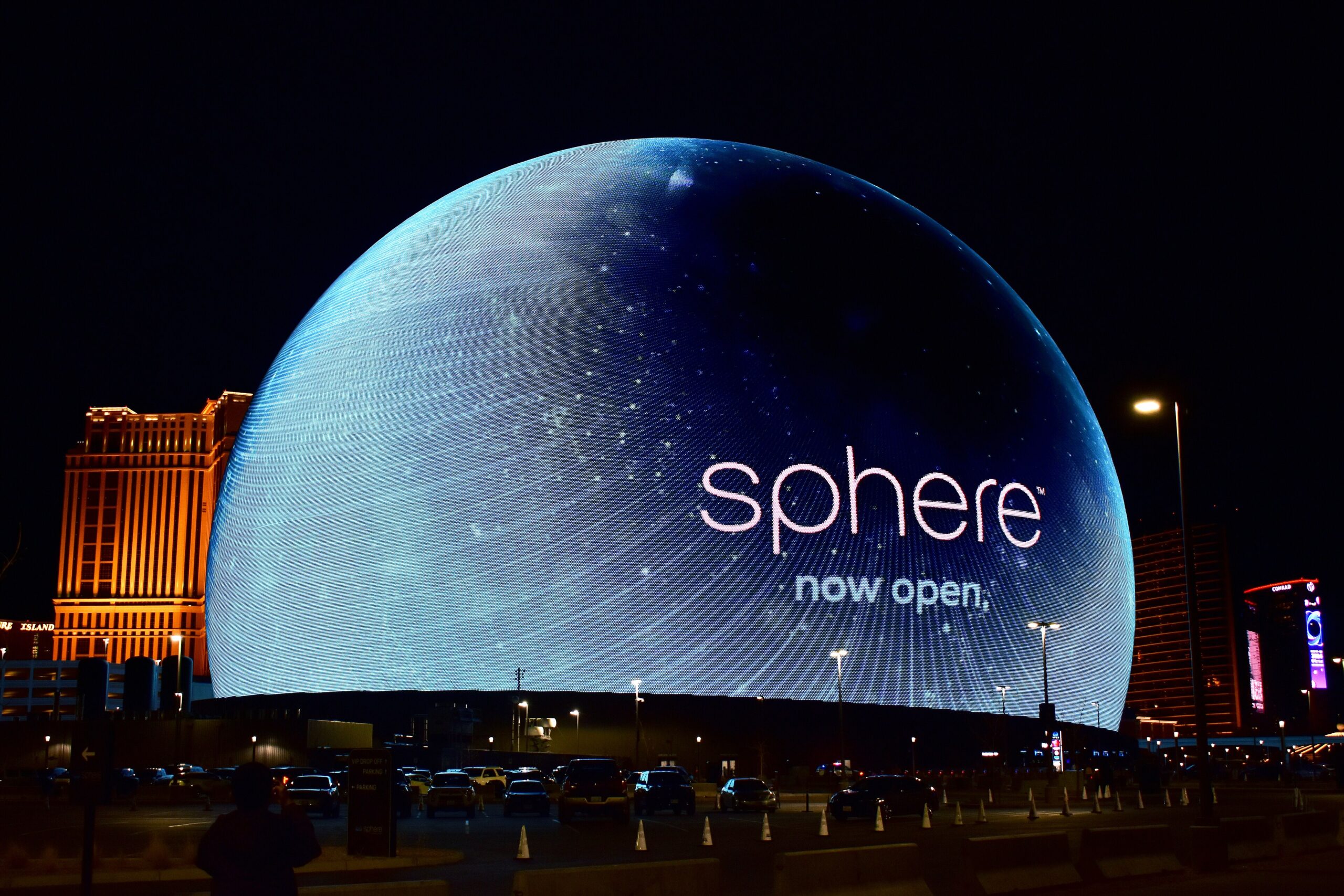
Metallica has not publicly given a song-specific reason for reviving “…And Justice for All.” The documented circumstances, however, provide a credible explanation for why it fit the moment. The band had promised catalog-spanning No Repeat Weekends, while Sphere offered an unusually fitting stage for the song’s bound Lady Justice imagery. On October 1, 2026, that combination turned a rarely performed 1988 epic into a centerpiece of Metallica’s Las Vegas production.
A Major Song That Had Nearly Vanished
“…And Justice for All” is not a forgotten B-side. It is the title track and second song on Metallica’s 1988 album. Metallica’s catalog and the album credits indexed by Encyclopaedia Metallum name James Hetfield, Lars Ulrich and Kirk Hammett as its writers.
Yet the song had been absent from Metallica concerts since August 9, 2014, when the band performed it at Heavy MTL in Montreal. Metallica’s concert archive documents that appearance, while Louder and Loudwire identified the Sphere performance as its first in 12 years.
Its return therefore carried more weight than an ordinary set-list change. Metallica was reclaiming a substantial composition from one of its best-known albums after more than a decade of leaving it untouched onstage.
It is tempting to explain the absence by pointing to the song itself. “…And Justice for All” is long, intricate and filled with shifting sections. It demands more space than a compact concert staple. Those qualities are evident in the recording, but they do not prove why Metallica stopped performing it. Without a direct statement from the band, the reason for the 12-year break remains uncertain.
What can be documented is that the song returned in a setting built for ambitious catalog selections and large-scale visual storytelling. Sphere supplied both.
Lady Justice Was Built for Sphere
The imagery associated with …And Justice for All is among the most recognizable in Metallica’s catalog: Lady Justice is bound, damaged and pulled off balance, turning a familiar symbol of fairness into an image of corruption and failure.
That visual language matches the title track’s concerns. Metallica’s published lyrics describe a justice system distorted by money, power, apathy and the pursuit of victory rather than truth. Sphere allowed the production to enlarge those ideas beyond an album cover or conventional video screen.
Consequence and Rolling Stone Australia described the October 1 sequence as drawing directly from the broken, bound Lady Justice figure. The animation placed the statue inside a prisonlike environment, added courtroom imagery and ended with figures pulling it down.
That distinction helps explain why the revival felt so natural, even if it does not establish why the band selected the song. Sphere did not merely make an old album cover look bigger. Its wraparound visual environment gave “…And Justice for All” a complete dramatic setting. A composition that occupies nearly 10 minutes on the original album became the framework for a slowly developing narrative.
Metallica’s official show record also lists a dedicated visual sequence for the song. The level of preparation demonstrates that its return was integrated into the production rather than added as an unplanned surprise.
The No Repeat Weekend Effect
The structure of Metallica’s Life Burns Faster residency also created favorable conditions for the song’s comeback.
Sphere Entertainment and Metallica both described the engagement as using the band’s No Repeat Weekend format. Each paired Thursday and Saturday engagement features entirely different songs, requiring Metallica to construct two distinct set lists rather than repeat essentially the same concert.
That approach changes how the catalog can be used. Familiar hits can still anchor the concerts, but a song played on Thursday cannot return during the paired Saturday show. Metallica’s announcement also said the residency’s set lists would span the band’s catalog and be enhanced by Sphere’s immersive technology.
The format does not prove that Metallica restored “…And Justice for All” to satisfy a set-list requirement. It does, however, create suitable conditions for a substantial album track to return. A song that might compete with shorter or more familiar material in a conventional concert can become a centerpiece when two separate musical and visual programs must be assembled.
The October 1 set placed “…And Justice for All” eighth, according to Metallica’s official show record and Loudwire’s published set list. That positioning made it part of the evening’s main structure rather than a closing novelty. Metallica then performed it again at Sphere on October 8 and October 15, confirming that opening night was not a one-time cameo.
“The Call of Ktulu” Strengthens the Case
Another performance from the same show reveals the broader possibilities behind the production.
“The Call of Ktulu,” the instrumental closing track from Metallica’s 1984 album Ride the Lightning, appeared later in the October 1 set. Metallica’s catalog and the album credits assign the composition to Hetfield, Ulrich, Cliff Burton and Dave Mustaine.
For Sphere, the band paired it with a giant sea-creature sequence. Consequence described a monster moving through the desert toward Las Vegas, while Rolling Stone Australia reported that the creature rose from the ocean before attacking the city. The reports differ in their summaries of the sequence, but both describe a large monster narrative surrounding the performance.
The result turned the instrumental’s ominous movement into a cinematic encounter, much as the Lady Justice production placed the themes of “…And Justice for All” around the audience.
“Ktulu” also carries a history of large-scale interpretation. A version performed by Metallica with the San Francisco Symphony and conductor Michael Kamen won the 2001 Grammy for Best Rock Instrumental Performance, according to the Recording Academy and the San Francisco Symphony.
Together, the two October 1 performances show that the opening-night production made room for ambitious catalog pieces alongside familiar hits. Both compositions have enough length, atmosphere and internal movement to support extended visual storytelling. Sphere made those characteristics useful rather than inconvenient.
An Old Song With a New Job
The most accurate answer to the headline is therefore layered.
Metallica brought “…And Justice for All” back during a residency designed around catalog-spanning, nonrepeating set lists, and the band gave it an elaborate production based on imagery inseparable from the original album. Those facts are documented. They show why the song worked particularly well in this setting, but they do not establish the band’s private reasoning for choosing it.
What remains unconfirmed is the precise calculation behind the decision. Metallica has not publicly provided a complete explanation for why the song returned after 12 years or why it disappeared after 2014.
But the performance shows what changed in practical terms. Inside Sphere, “…And Justice for All” was no longer simply a lengthy track competing for space in a Metallica concert. It had become a complete audiovisual scene capable of helping distinguish one half of a No Repeat Weekend.
The professionally filmed footage released by Metallica extends that moment beyond Las Vegas. It documents both the song’s return and the new visual function the production gave it. Sphere did not supply a confirmed reason for the revival, but it supplied a setting in which the revival made artistic and structural sense.





Leave a Reply